All Projects
Seaside, Florida
Seaside, FL 32459, USA

Seaside, Florida
1978

Seaside, FL 32459, USA
  • Mixed Development
  • public space
  • social fabric
  • place making
  • Masterplan

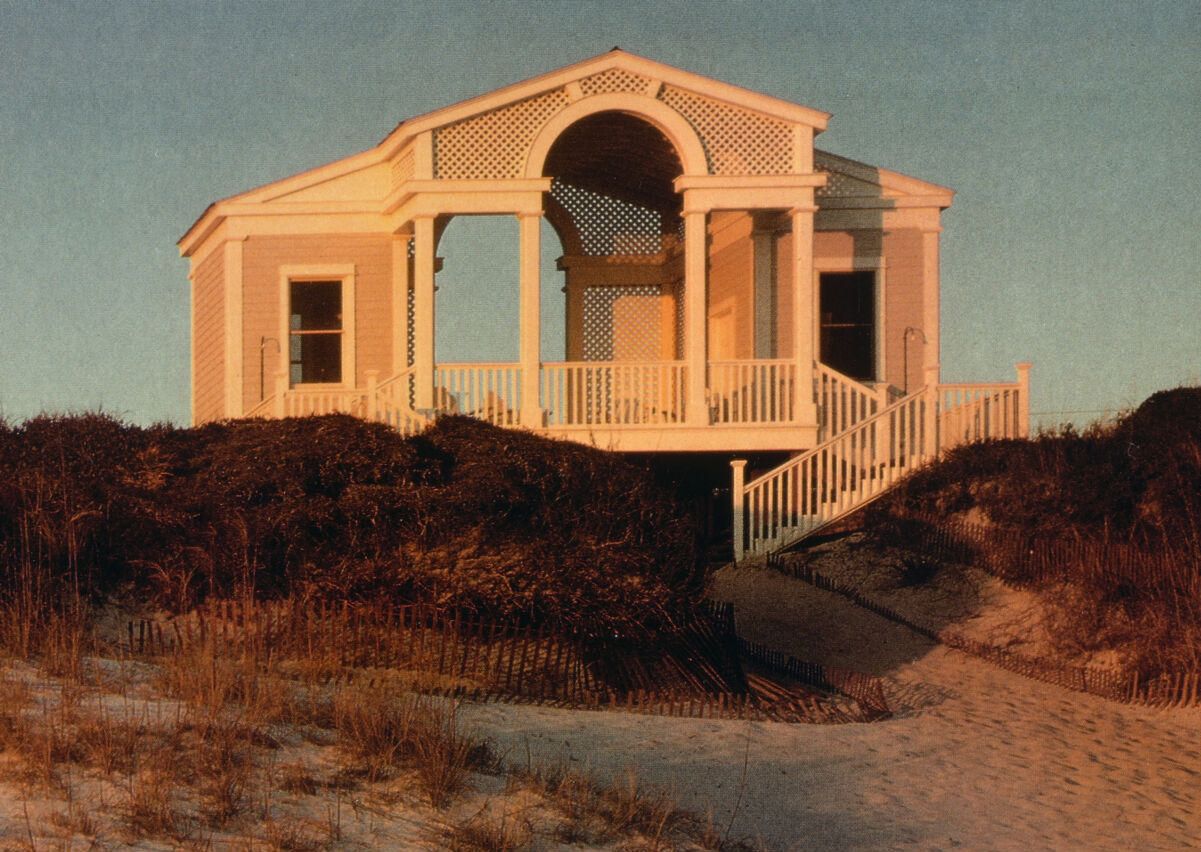
Seaside, Florida, is widely regarded as the first fully realized New Urbanist community, a prototype for the movement’s core principles. It is a pioneering master-planned project located along the Gulf Coast in the Florida Panhandle, between Destin and Panama City Beach. Designed in the 1980s by Andrés Duany and Elizabeth Plater-Zyberk, Seaside sought to counteract suburban sprawl by creating a walkable, mixed-use, human-scaled neighborhood reminiscent of small traditional towns. The community was meticulously planned with a compact, pedestrian-friendly layout, arranging essential amenities, such as shops, restaurants, civic buildings, and recreational spaces within a short walking distance of residences. The design is grounded in a clear street hierarchy and a compact urban grid that prioritize pedestrian access, public spaces, and mixed-use functionality, featuring a fine-grain network of narrow streets, small blocks, and interconnected pathways that promote walkability and reduce car dependency. Buildings are closely spaced with minimal setbacks, front porches, and consistent scale, fostering social interaction and street life. A central square, along with civic buildings, a school, and a beachfront pavilion, form the town’s key public nodes. Meanwhile, strict architectural codes define a cohesive visual identity, which draws from traditional Southern coastal vernacular styles. Public green spaces and pocket parks are distributed to provide access to open space for residents. While some critics argue that its exclusivity and high property values challenge its initial ideals of inclusivity, Seaside remains a landmark example of community-oriented urban design, which demonstrates the viability of traditional urban design principles in a modern development context. The town became a reference for planners, designers, and policymakers, even a cultural icon after being featured in The Truman Show, a 1998 movie in which Jim Carrey leads a seemingly ideal life in an ideal place.

Project Leads

  • Robert Davis

Organizations

  • Duany Plater-Zyberk & Company (DPZ)
  • Seaside Community Development Corporation (SCDC)
  • Seaside Institute
  • Seaside Architectural Review Committee (ARC)

Stages

  • Master Planning
  • Design Development
  • Planning
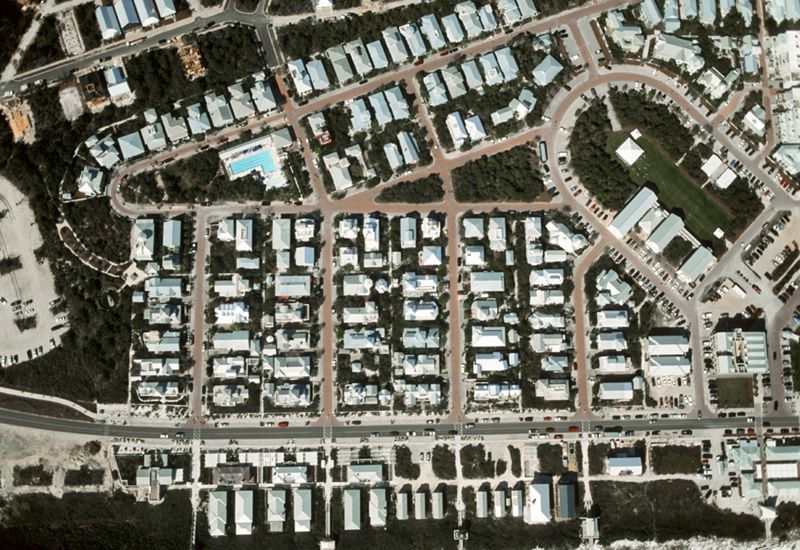
Neighborhood overview of Seaside
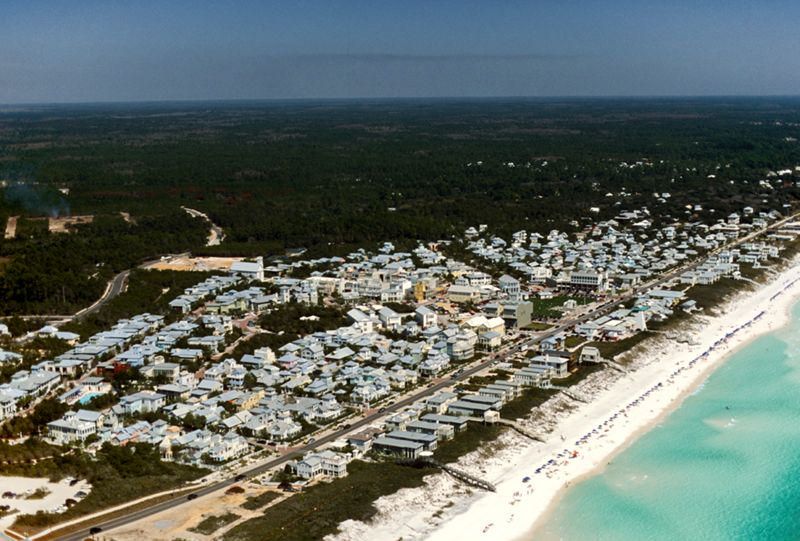
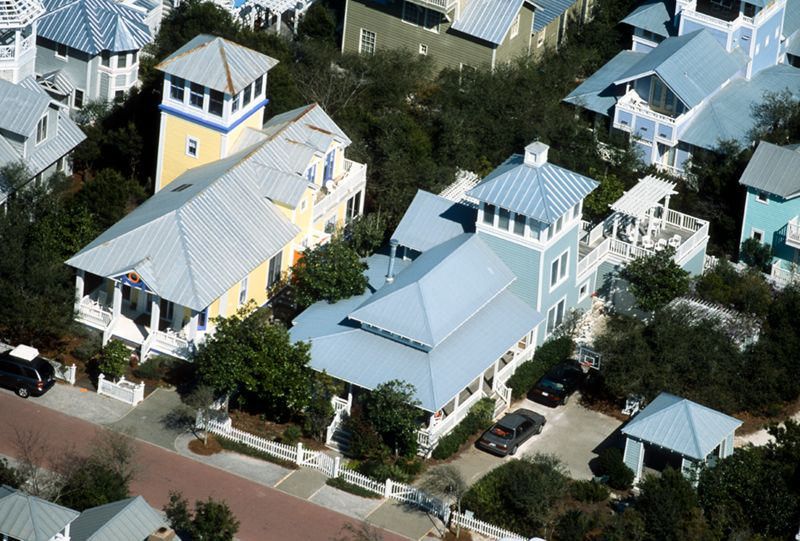
Aerial views of Seaside

Site

Housing density
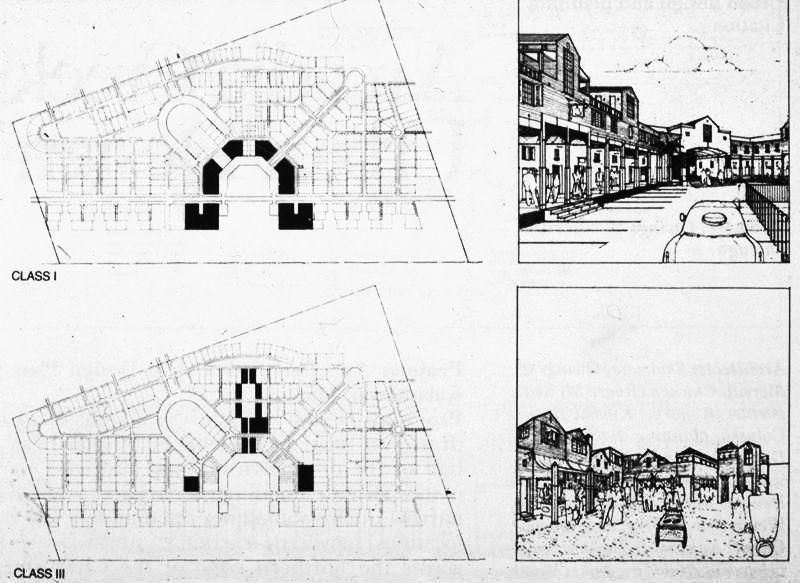
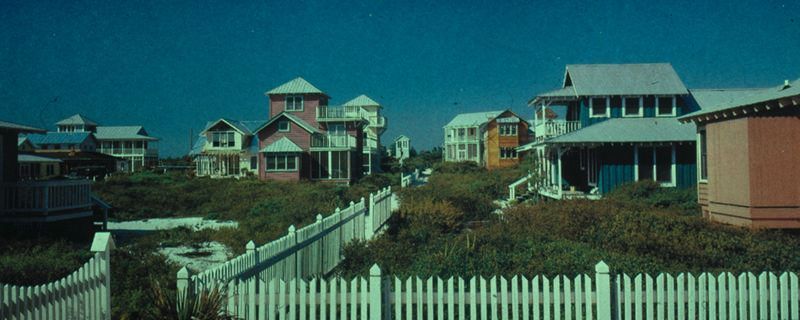
Designed as a compact, walkable community, Seaside features a radial street plan centered on a mixed-use Town Square, creating a network of narrow streets and mid-block pedestrian paths that prioritize human-scale interaction over car traffic. The design incorporates narrow pedestrian walkways, rear walks between backyards, and midblock paths to improve walkability and neighborly interaction. Seaside's land use strategy is rooted in mixed-use zoning. The town includes approximately 423 residential units, 42 specialty retail shops, 12 restaurants, a public charter school, an interfaith chapel, and various cultural institutions. Public spaces like Central Square, the Lyceum, and beachfront pavilions serve as focal points for community life and visitor activity. Residential blocks are organized with a graduation of building types: Larger beachfront homes front the ocean, denser housing clusters near the central square, and a blend of single-family and multi-family units are distributed further inland. This spatial sequencing supports both diversity in housing typology and a clear urban-to-rural transition. Environmentally, Seaside was notably ahead of its time. Unlike typical beach resorts that flattened dunes for ocean views, Seaside’s master plan preserved the site’s sugar-white sand beaches and natural dune systems. These dunes are ecological buffers and storm barriers, reflecting a commitment to long-term environmental resilience. David (Robert Davis, the founder) believed the untouched natural beauty, particularly the turquoise waters and bright beaches, was central to the town’s appeal. Beach access is intentionally democratized through public pathways and dune crossovers, ensuring the shoreline remains open to all residents and visitors. Underlying physical design is a strong regulatory framework rooted in form-based code, which unifies diverse architectural styles—Victorian, Neoclassical, Postmodern—into a cohesive streetscape. The code also enforces traditional urbanist principles, such as rear alleys, shared public spaces, and concealed garages. The emphasis on mixed-use development and transect-based planning influenced the later evolution of the Smart Code, making the project also a policy model for sustainable urbanism.

Typology

Mixed-use, Resort-town development

Land use type

Residential

Size

80 acres (32 hectares)

Population/density

2,400 people/sq mi

Gross floor area

9.2 dwelling/per acre

Community Infrastructure

  • public park
  • sports courts
  • soccer fields

Timeline

1946-1982

People

Awards

Time Magazine’s “Best of the Decade”

1989

Time Magazine recognized Seaside in 1989 as one of the decade's most significant design achievements. The town was lauded for its innovative urban planning and its role in revitalizing traditional community design principles.

Progressive Architecture (P/A) Award

1984

Seaside's master plan received the Progressive Architecture (P/A) Award Citation. The P/A Award highlighted Seaside’s innovative approach to walkability, mixed-use zoning, and architectural guideline.

Congress for the New Urbanism (CNU) Charter Award

1992

Seaside was one of the first communities to receive this award, becoming a pioneer of the New Urbanism

Urban Land Institute (ULI) Award for Excellence

2003

ULI award recognized Seaside's role in the New Urbanism movement. It was a successful private-public development model, which balanced economic viability with high-quality community design.

Seaside Prize

1993

TheiInaugural Seaside Prize was awarded to Duany, Plater-Zyberk, and Vincent Scully for their roles in Seaside’s masterplan and impact on urbanism.

Jury

Seaside InstitudeJury Chair

National Register of Historic Places Designation

2010

In 2010, Seaside was listed on the National Register of Historic Places (NRHP), a prestigious federal recognition of its architectural and cultural significance. This designation was granted by the National Park Service (NPS).

Media

Filters:
No records.

Texts

Filters:
No records.

Bibliography

Sort