All Projects
Skopje Master Plan
Skopje, North Macedonia

Skopje Master Plan

Skopje, North Macedonia
  • building system
  • Masterplan
  • historic
  • public space

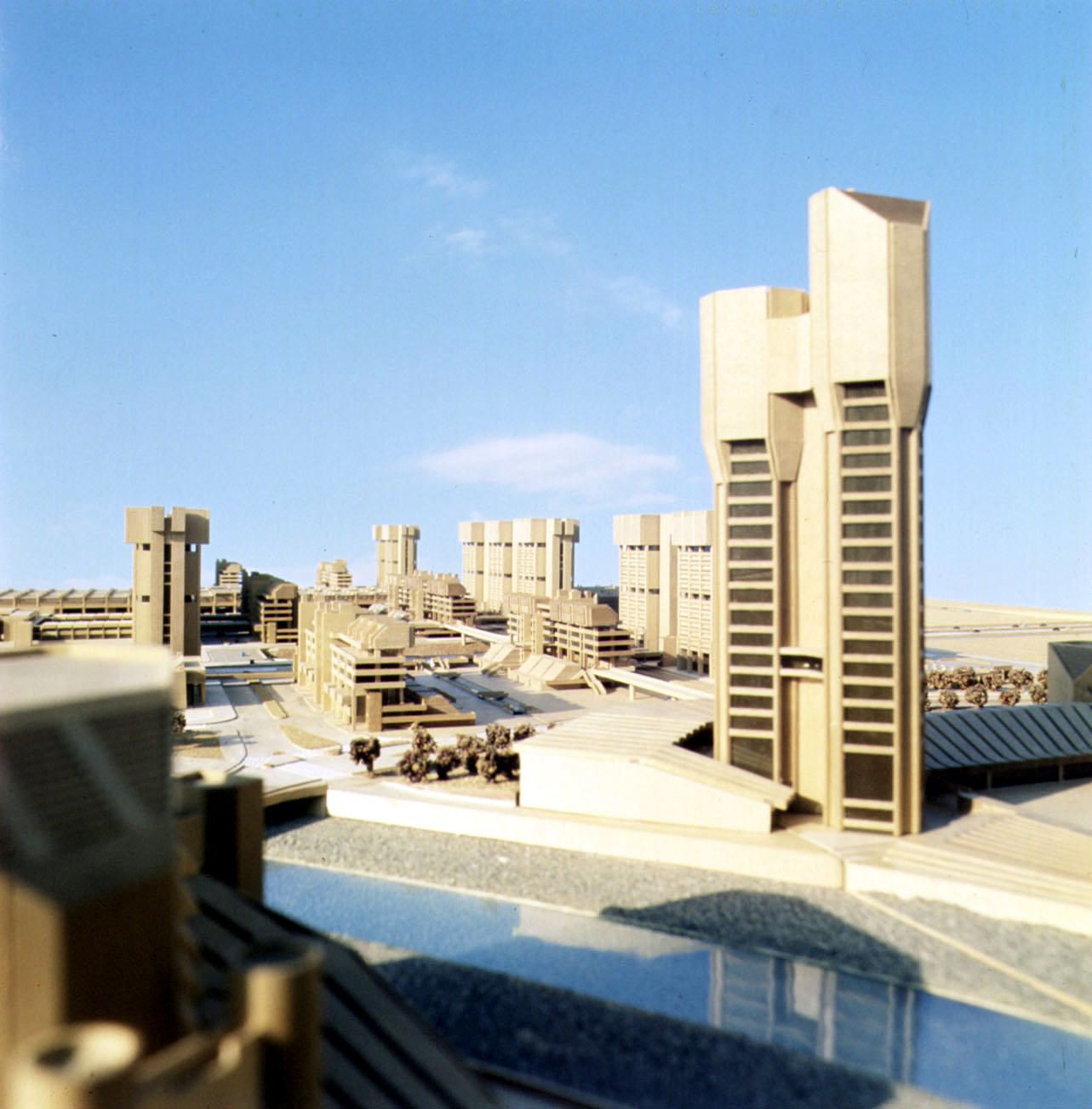
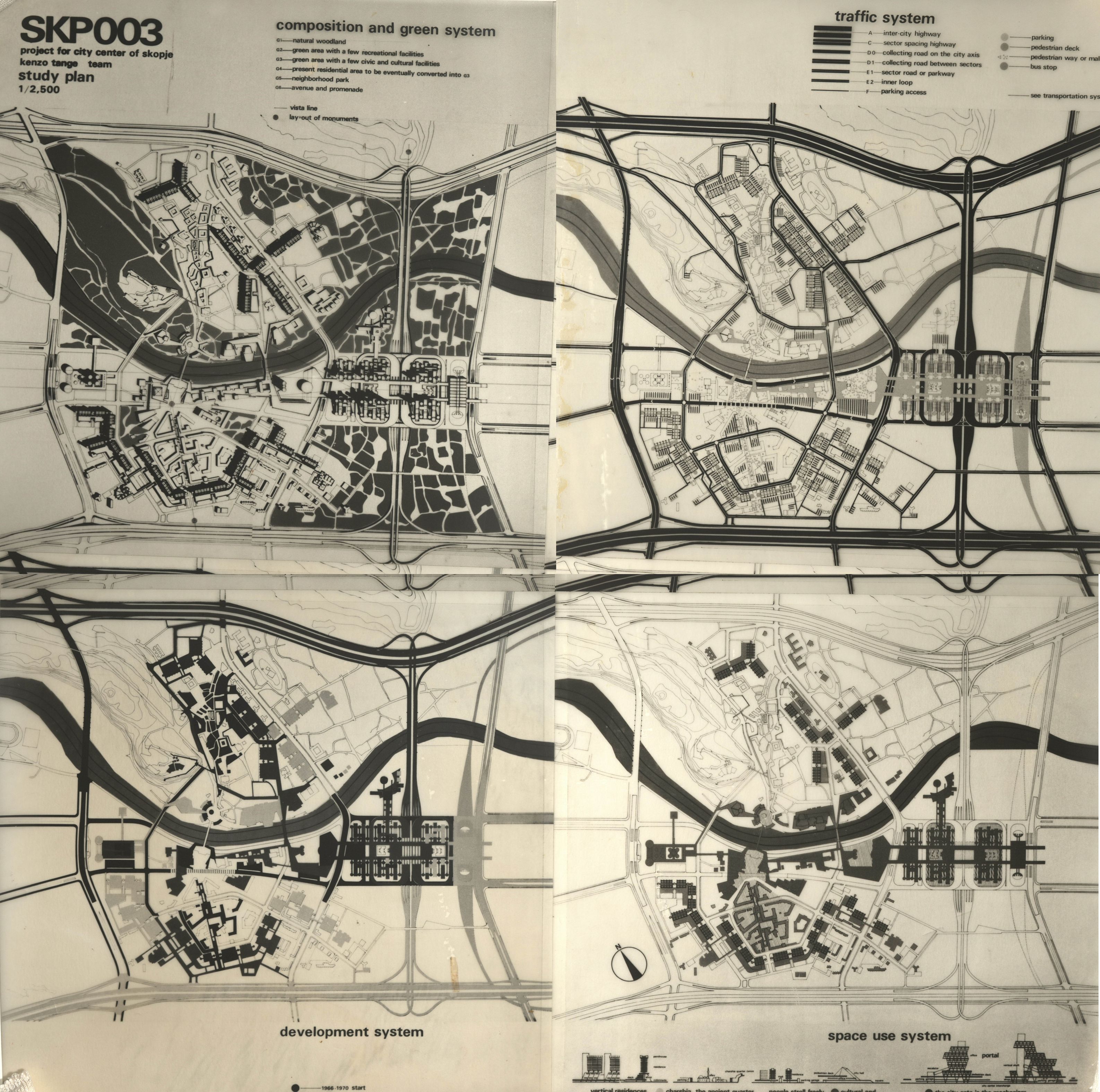
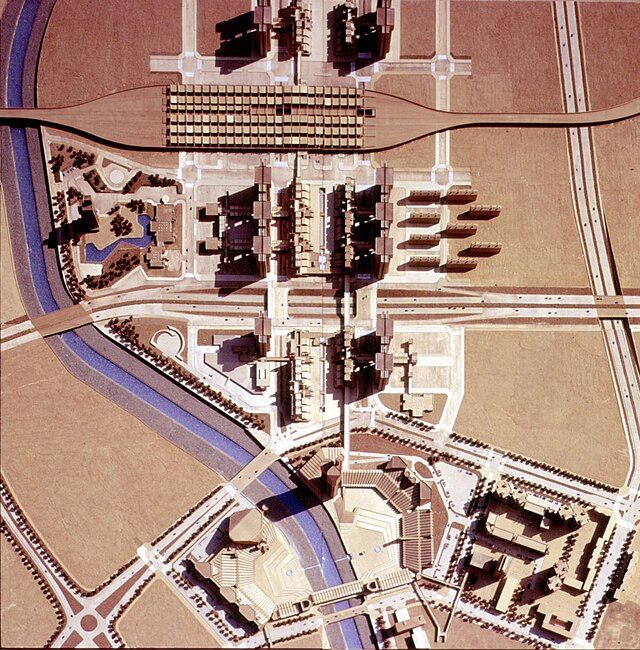
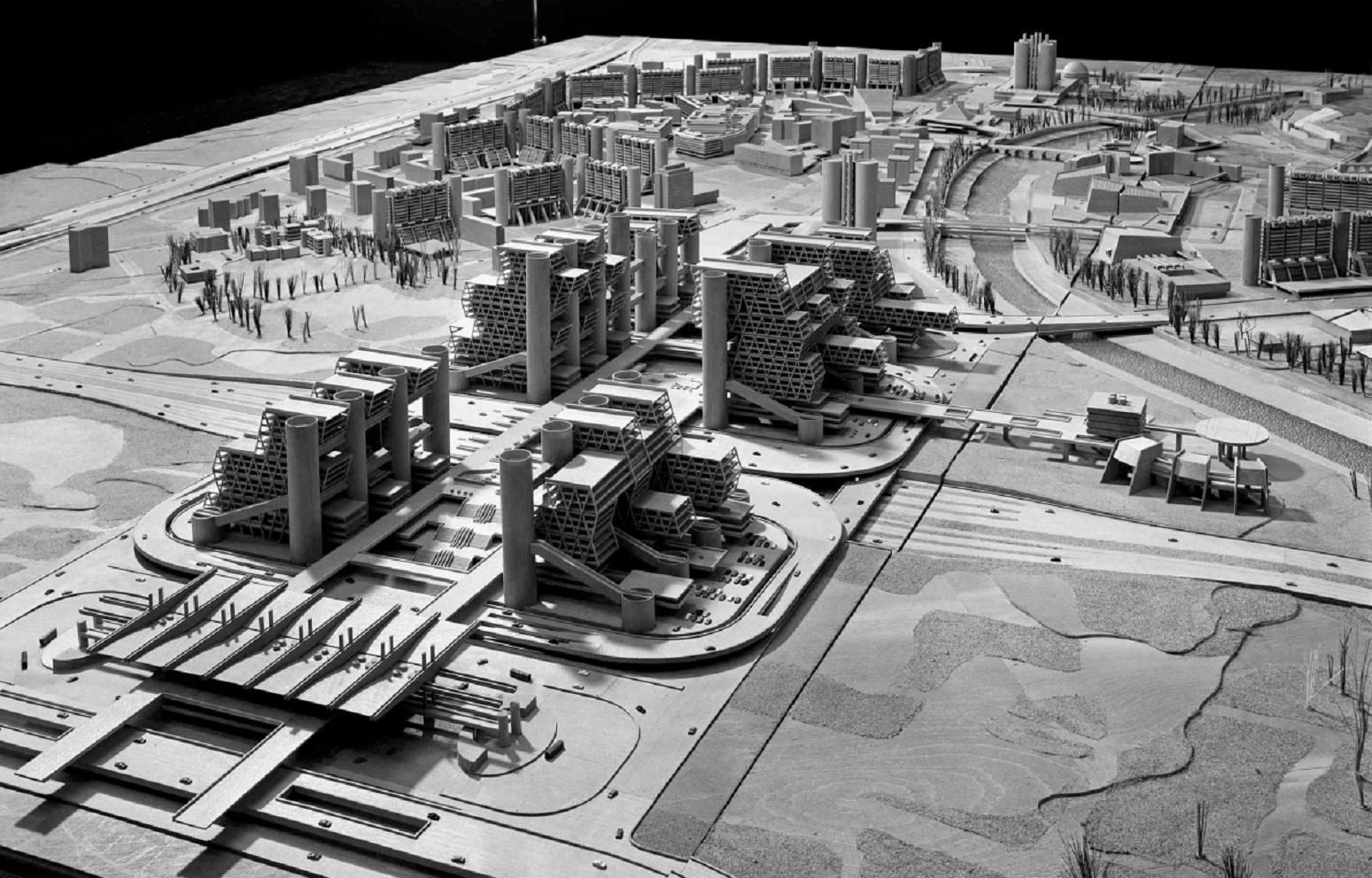
On 26 July 1963, a devastating earthquake struck the Yugoslav city of Skopje, destroying over 75 percent of the city. It prompted an international response led by the UN Special Fund. A master plan was developed through the Town Planning Project, including an international competition to redesign the city center. Kenzo Tange’s team won first prize and shaped the vision for a modern, post-disaster Skopje. The plan for Skopje demonstrated the remarkable continuity of Tange's approach to city design. Tange's proposal was based on two metaphorical concepts, the "City Gate" and "City Wall," through which Tange developed and released in Skopje the striking planning ideas he began in his Tokyo Bay proposal. They referred to the two major elements of the city with distinct characters. The proximity of residential areas to the business district was expected to bring vitality back to the city. The concept of City Gate was based on a linear axis concentrating all urban functions related to communication and business operation. In the middle of this stretch was a gigantic gateway structure resembling incoming traffic from regional highways. The axis ended at Republic Square, Skopje's principal civic space on the River Vardar and surrounded by state and municipal facilities. Skopje’s master plan focused on post-disaster reconstruction, using megastructures, integrated transit, and modular zoning to shape a modern and adaptable city center. While the City Wall was never fully realized due to limited socialist funding and political changes, the plan established a structured urban framework that reflected the ambitions of functionality and flexibility in a post-war socialist city.

Project Leads

  • Kenzō Tange Associates

Organizations

  • Doxiadis Associates
  • Government of the Socialist Federal Republic of Yugoslavia
  • Municipality of Skopje
  • UNDP (United Nations Development Programme)
  • United Nations (UN)
  • UNESCO
  • Kenzō Tange Associates
  • Institute for Urbanism and Architecture Skopje (IAUS)

Stages

  • Design Development
  • Master Planning
  • Schematic Design
Perspective of Skopje
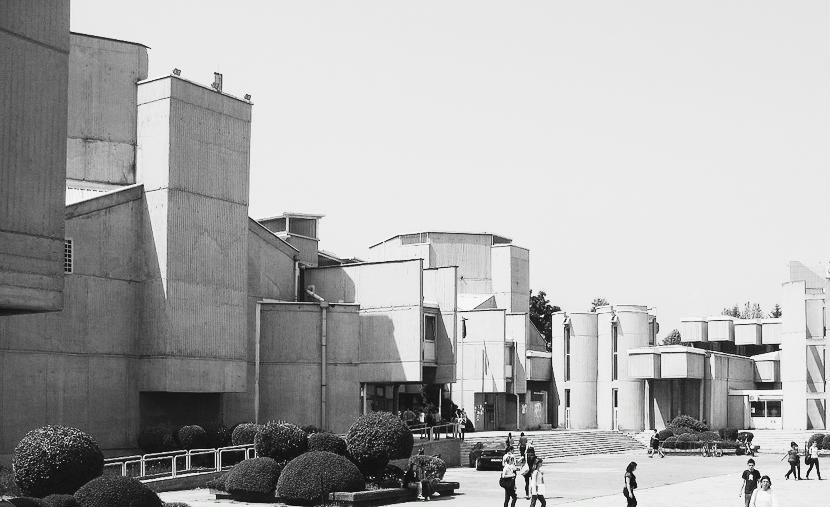
The central university building

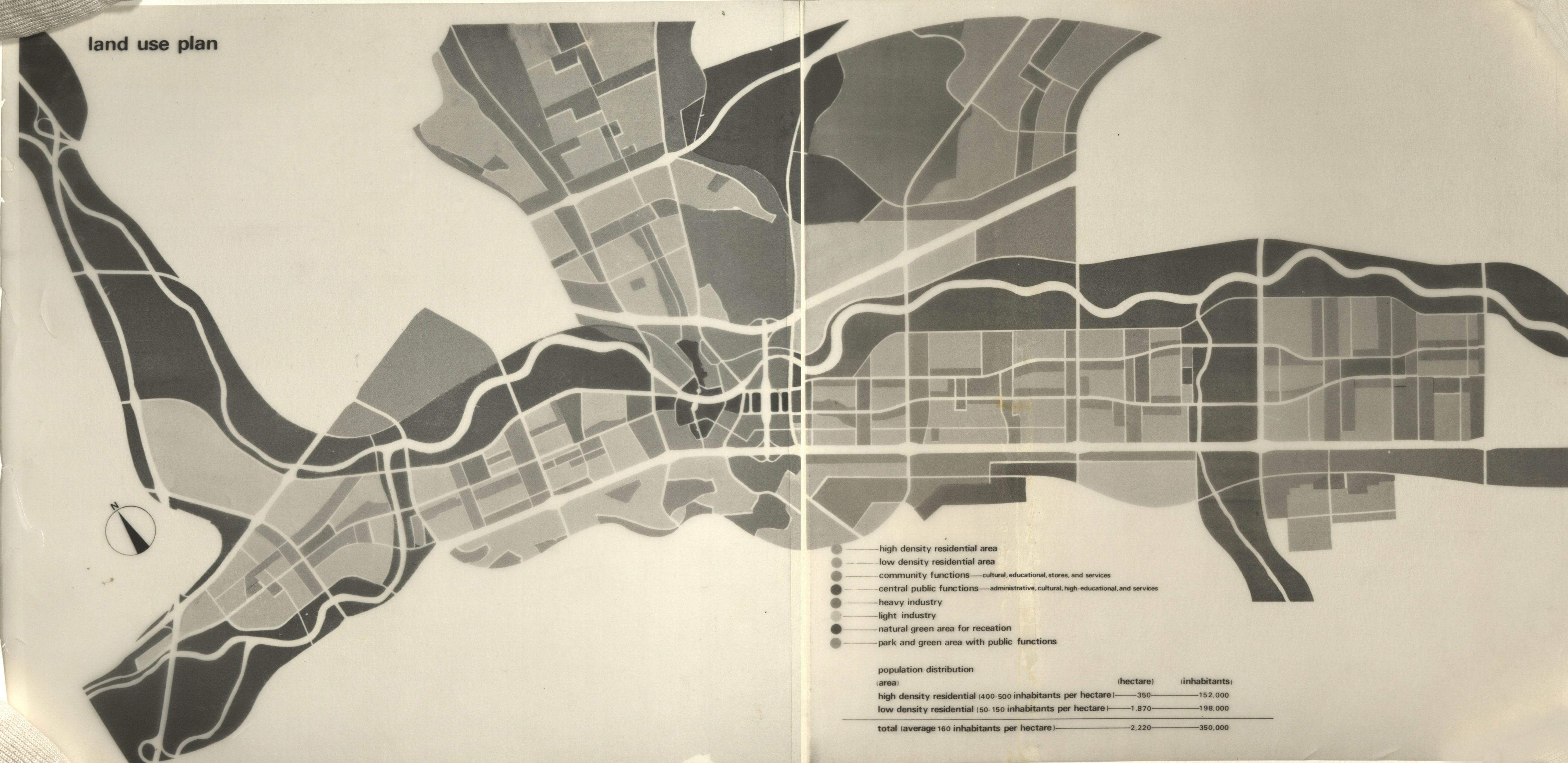
Site

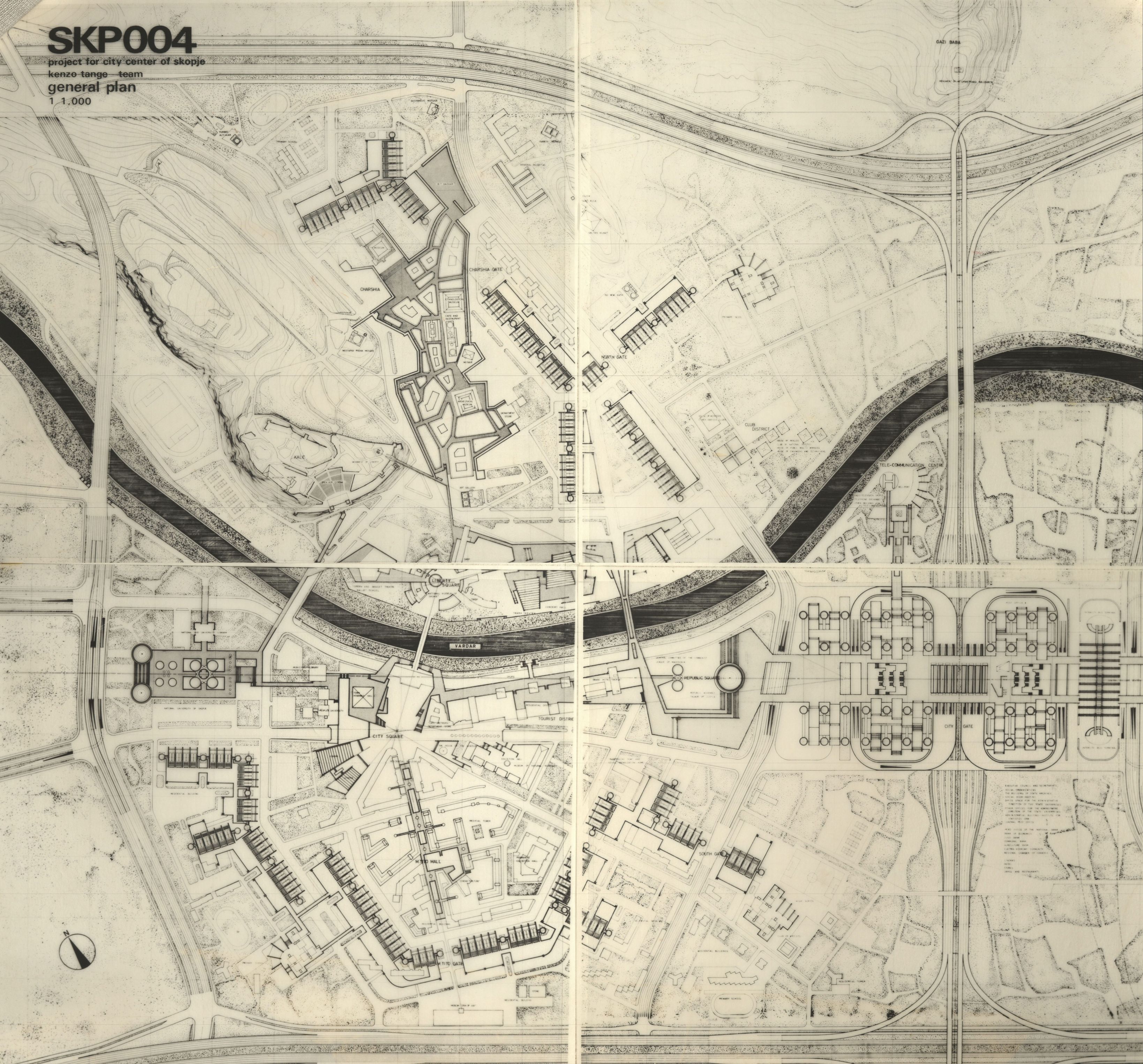
General plan of Skopje
The Skopje project marked a shift in Tange’s work, where urban structures took on deeper symbolic meaning. Unlike his earlier schemes, Skopje’s City Gate and City Wall were not just functional elements but metaphors that shaped the city's identity. The City Wall, envisioned as an elevated megastructure, housed government offices, commercial centers, and cultural institutions along a continuous pedestrian-friendly axis. This elevated platform separated vehicular traffic from pedestrian movement, improving urban connectivity and accessibility in a modernist and modular city core. The City Gate was Skopje’s main transportation center, incorporating rail, highways, buses, and pedestrian movement in a multi-level structure. Inspired by Le Corbusier’s Ville Contemporaine, it housed the train station underground, with parking decks, transit terminals, and pedestrian zones layered above. This transportation center connected directly to the City Gate, a business district featuring office towers, cultural institutions, shops, and restaurants—all linked by elevated motorways to form the city’s main axis. Skopje’s linear urban structure extended from this terminal, linking the central business district to the civic square as the city’s backbone. In line with Tange’s earlier projects, the plan introduced a monumental scale and a three-dimensional transport network that organized movement across different levels. Buildings in both the City Gate and City Wall followed a modular design, combining cylindrical towers for circulation and services with horizontal volumes for residential and commercial uses, a concept first developed in Tange’s Kofu prototype. Public space and urban identity were key to the plan, with the Vardar River acting as a civic spine. Tange incorporated green corridors, riverfront parks, and open plazas for accessibility and social interaction. His modernist approach favored exposed concrete, geometric forms, and car-free public plazas, espousing socialist ideals of collective space and Metabolic urbanism, where pedestrian connectivity and monumental infrastructure coexisted to shape a flexible city.

Typology

Megastructure, Linear City, Mix-use Core

Land use type

Mixed Development

Size

716.6 acre

Population/density

3.73 inhabitants/acre (Administrative Boundaries)

Community Infrastructure

  • physical mobility
  • public transportation
  • public park

Timeline

1963-2016

People

Awards

International Competition for the Reconstruction of Skopje

1965

Kenzo Tange and his team from Japan won the international competition on the master plan for Skopje’s reconstruction after the 1963 earthquake. It features a linear urban structure with symbolic concepts of "City Gate and City Wall ".

Jury

the United Nations the Yugoslav government Juror

Media

Filters:
No records.

Texts

Filters:
No records.

Bibliography

Sort