Olympic Sculpture Park1889-1999
- open space
- redevelopment
- infrastructure
- pedestrian
- industrial
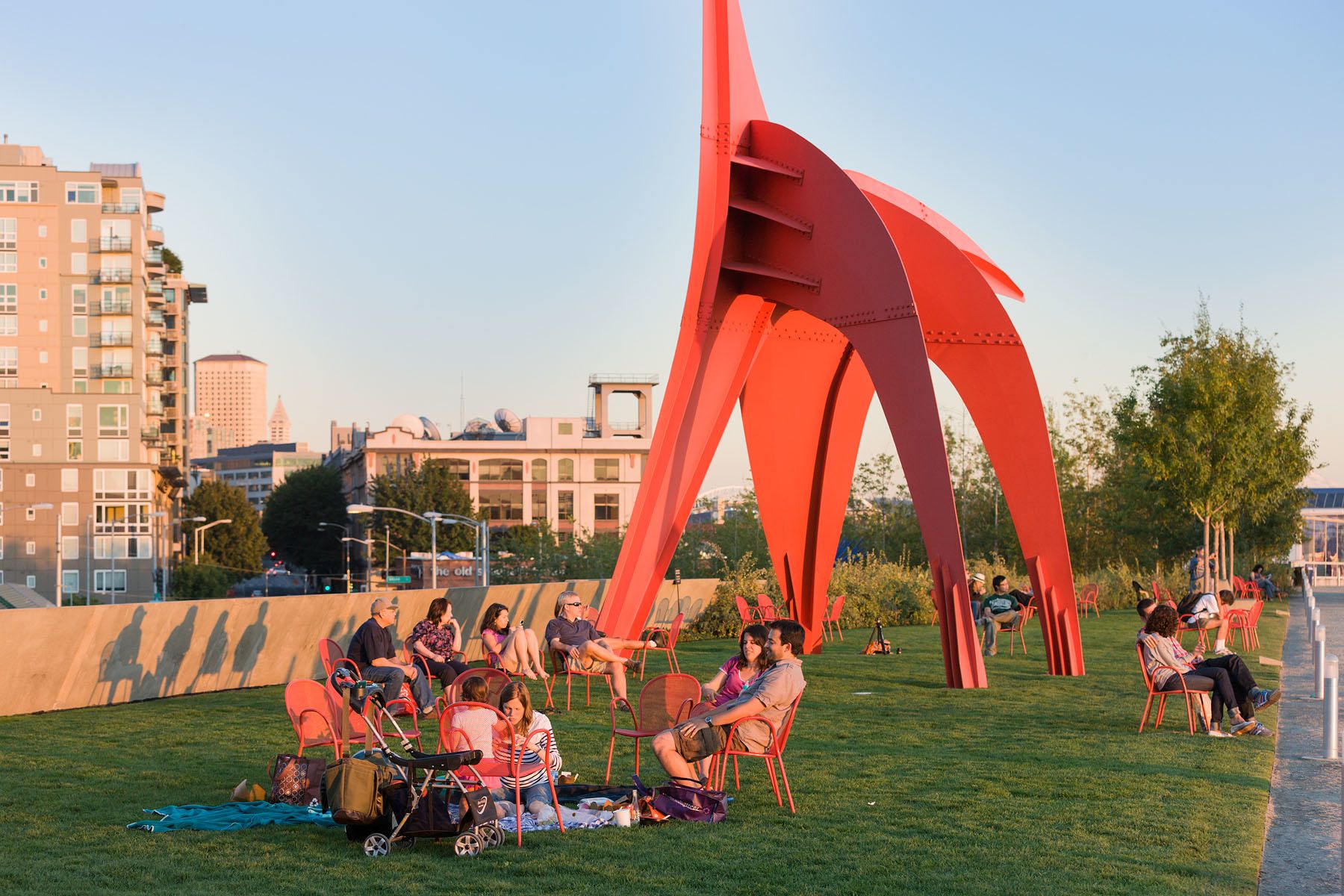
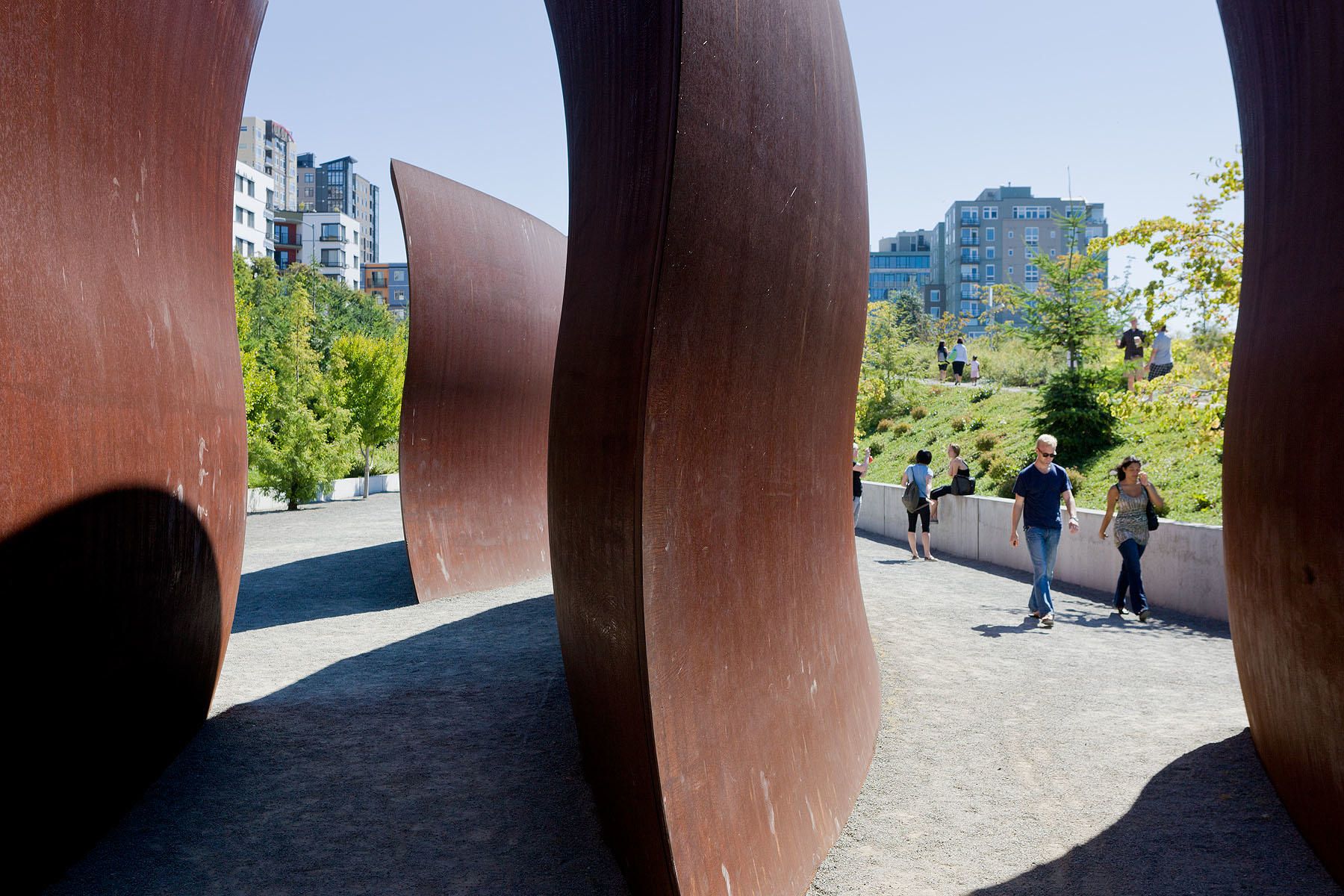
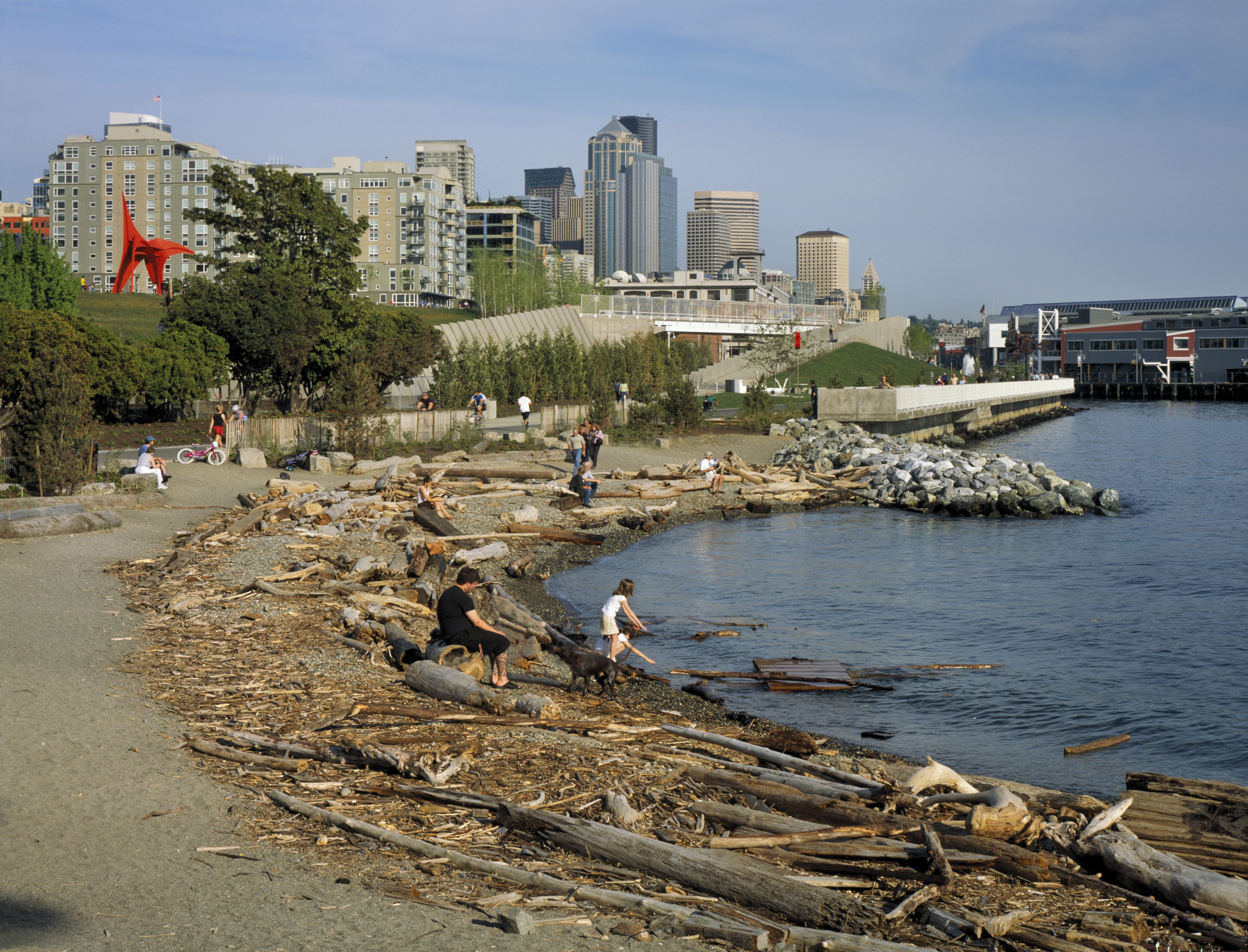
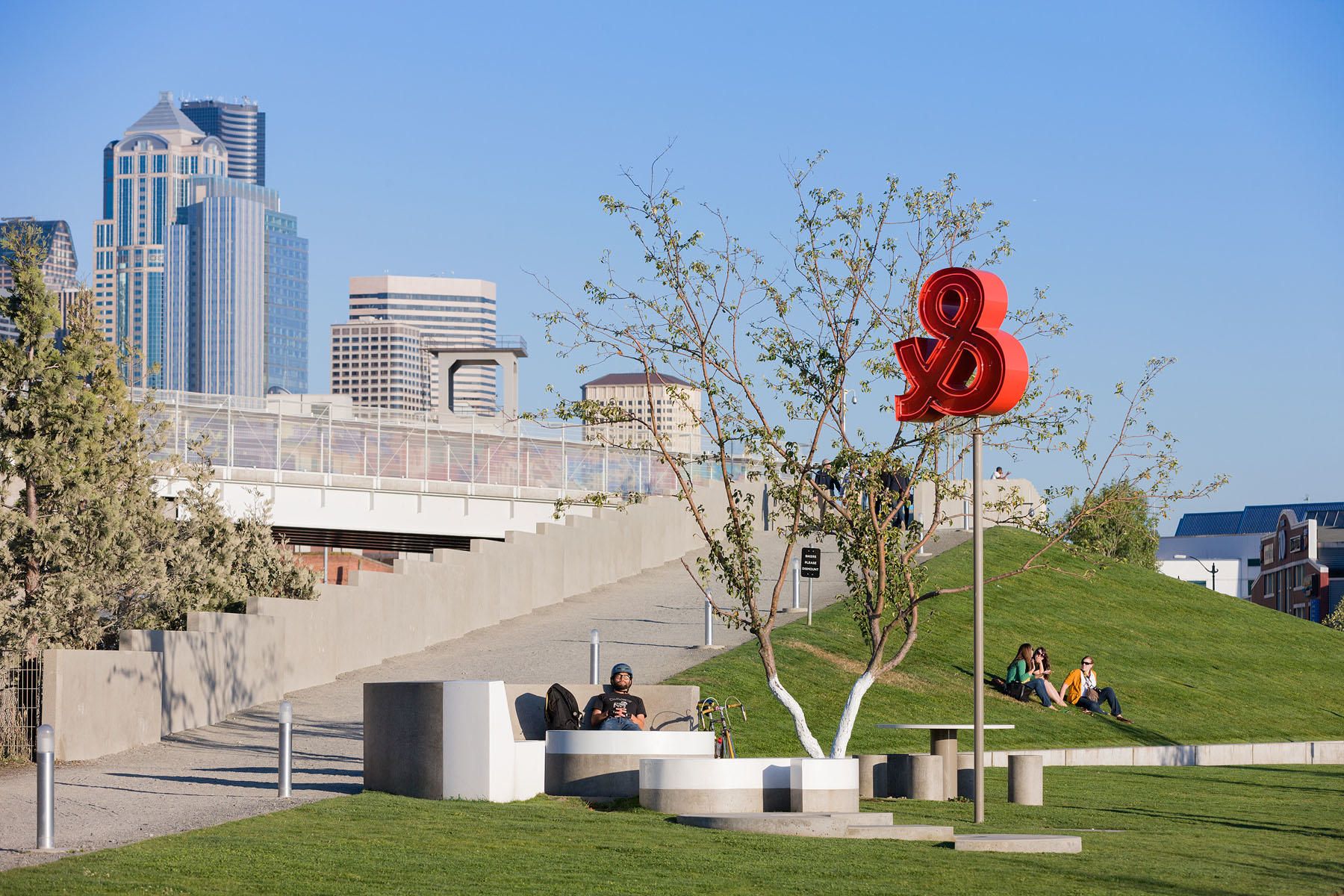
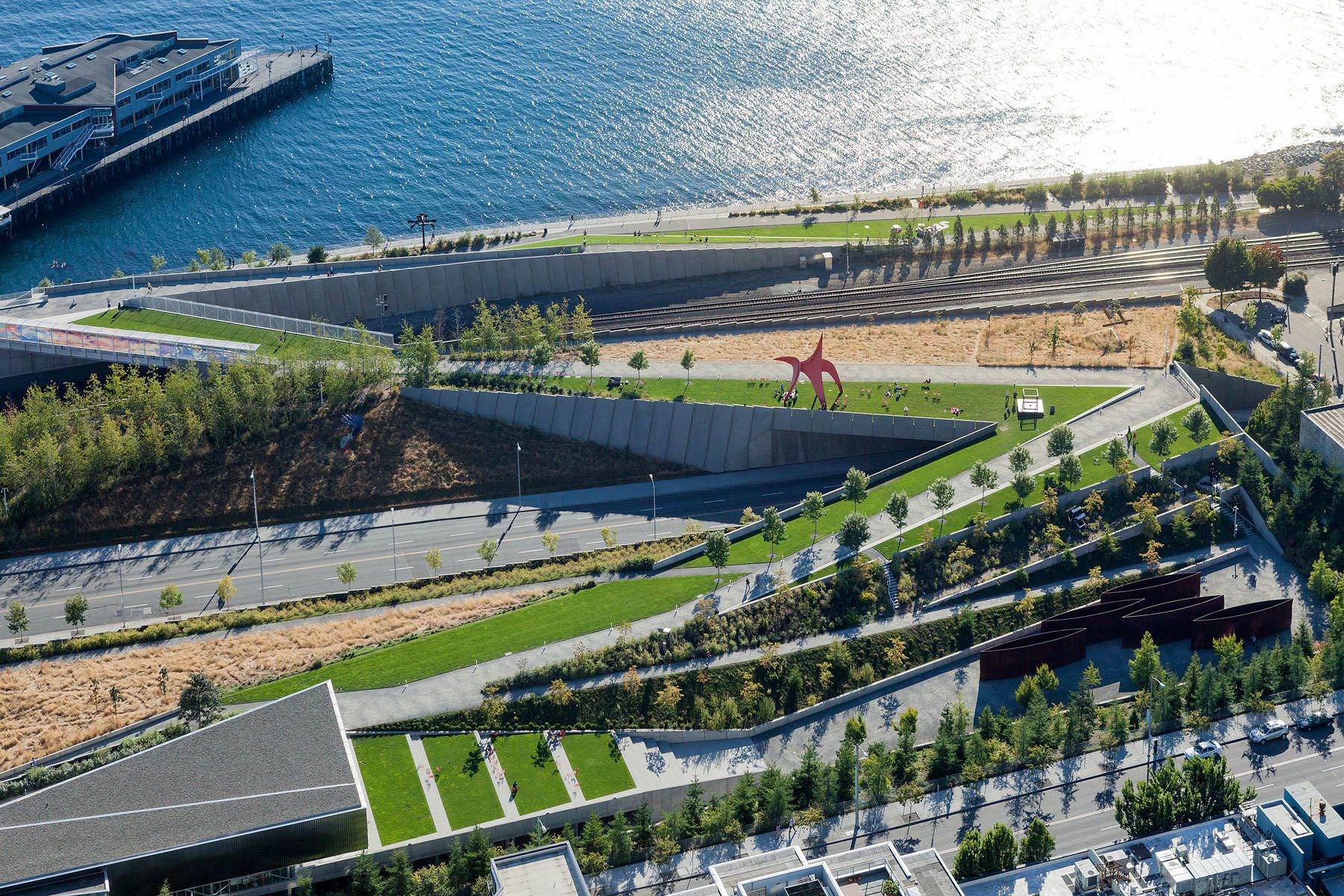
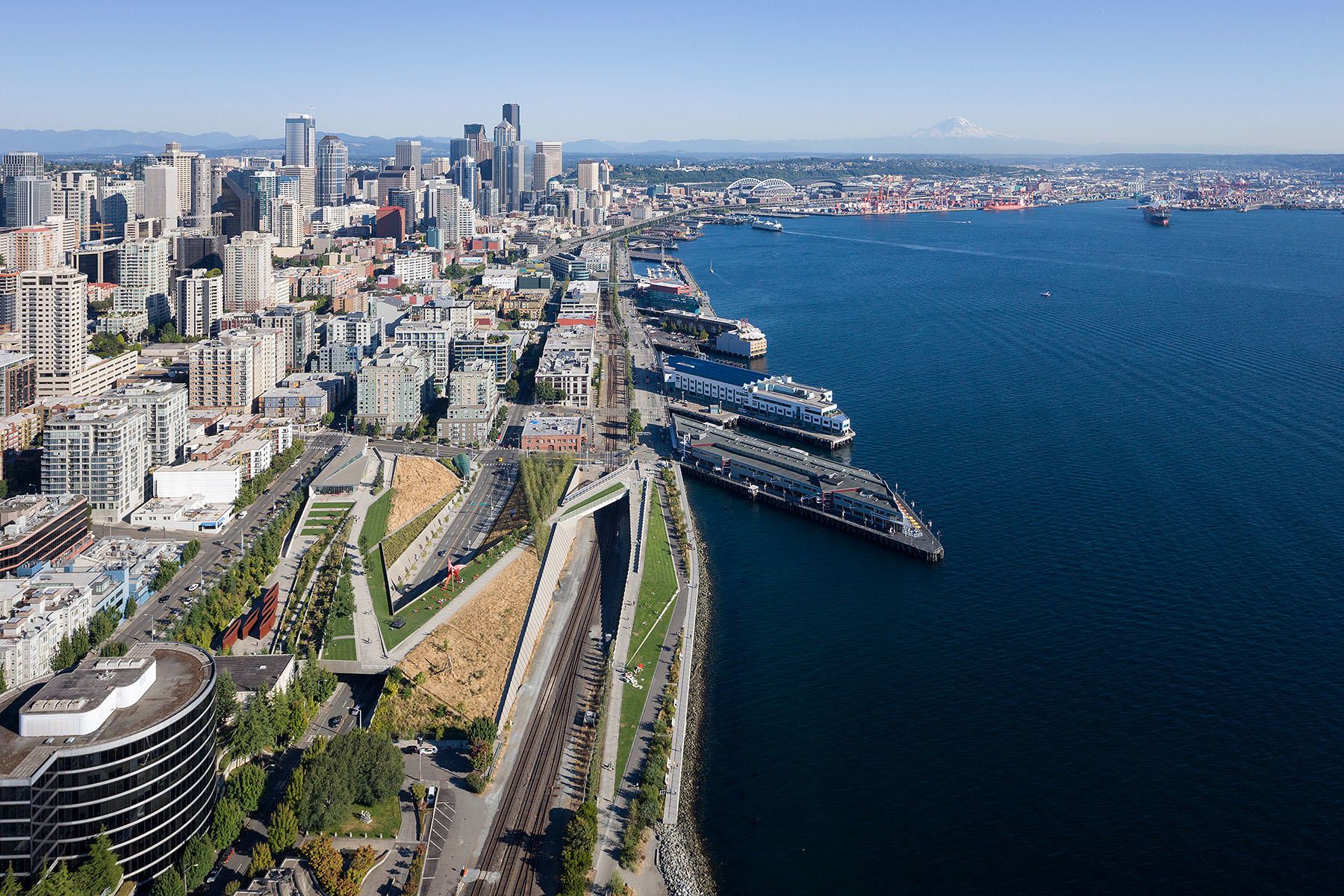
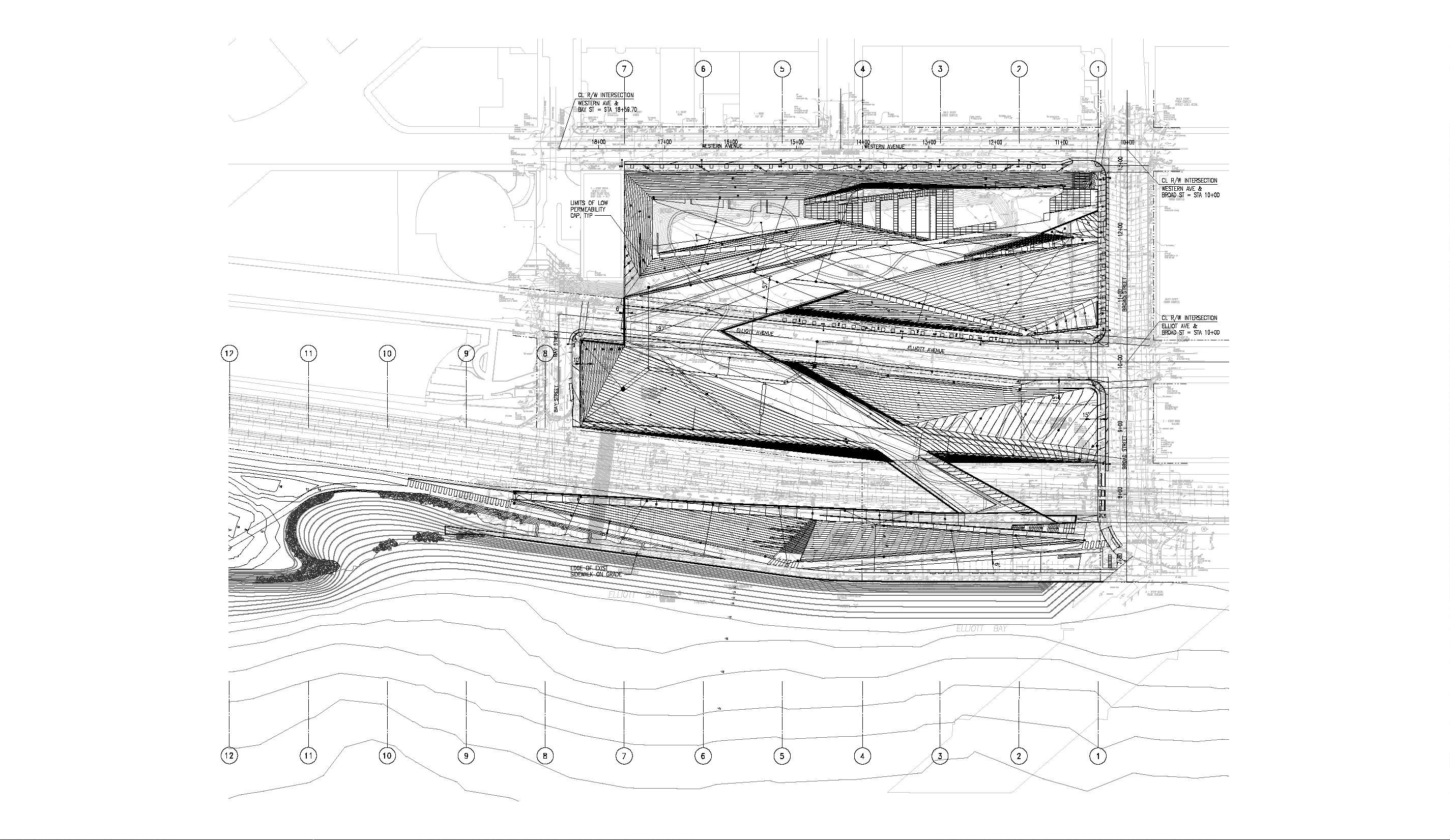
The Olympic Sculpture Park joins the efforts of multiple skills in design, landscape planning, and engineering. The Z-shaped park is situated in a complex infrastructural node, creating pedestrian access to the open space on different levels while overcoming the terrain topography. By combining the urban fabric, the existing infrastructure, and the waterfront, the project represents an urban amenity with the potential to recover the Seattle center Waterfront. The project intervened in an urban condition radically transformed by industrial development after the late Nineteenth century. The site was used primarily for industrial purposes until the 1960s and 1970s. More recently, after residential speculation caused by the proximity to the waterfront, the area - destined to become a private development -became a free public open space under the ownership of the Seattle Art Museum. Olympic Sculpture Park is not only a green space; it is also a sculpture garden in an urban setting, a direct extension of the Seattle Art Museum, which displays part of its sculpture collection there. In addition, the park is characterized by the presence of two buildings that enhance the system of open spaces: the Weiss/Manfredi pavilion, which houses museum activities, and the Neukom Vivarium, by artist Mark Dion, which includes a 60-foot-long nurse log.
Project Leads
- WEISS/MANFREDI Architecture, Landscape, Urbanism
Organizations
- Seattle Art Museum
- WEISS/MANFREDI Architecture, Landscape, Urbanism
- Magnusson Klemencic Associates
- Charles Anderson Landscape Architecture
- Anchor Environmental
- Hart Crowser
- ABACUS Engineered Systems
- Brandston Partnership Inc.
- Aspect Consulting
- Pentagram
- ARUP
- Bon Appetit
- JLR Design
- Doyle + Associates
- Owen Richards Architect
- Sellen Construction
- Barrientos LLC
Stages
- Design Development
- Construction
- Schematic Design
- Planning
Site
Typology
Landscape, UrbanLand use type
Open SpaceSize
9 acresPopulation/density
Seattle has a population density of about 9,248 people per square mileGross floor area
11, 000 sq ft