Broadacre City1932-1954
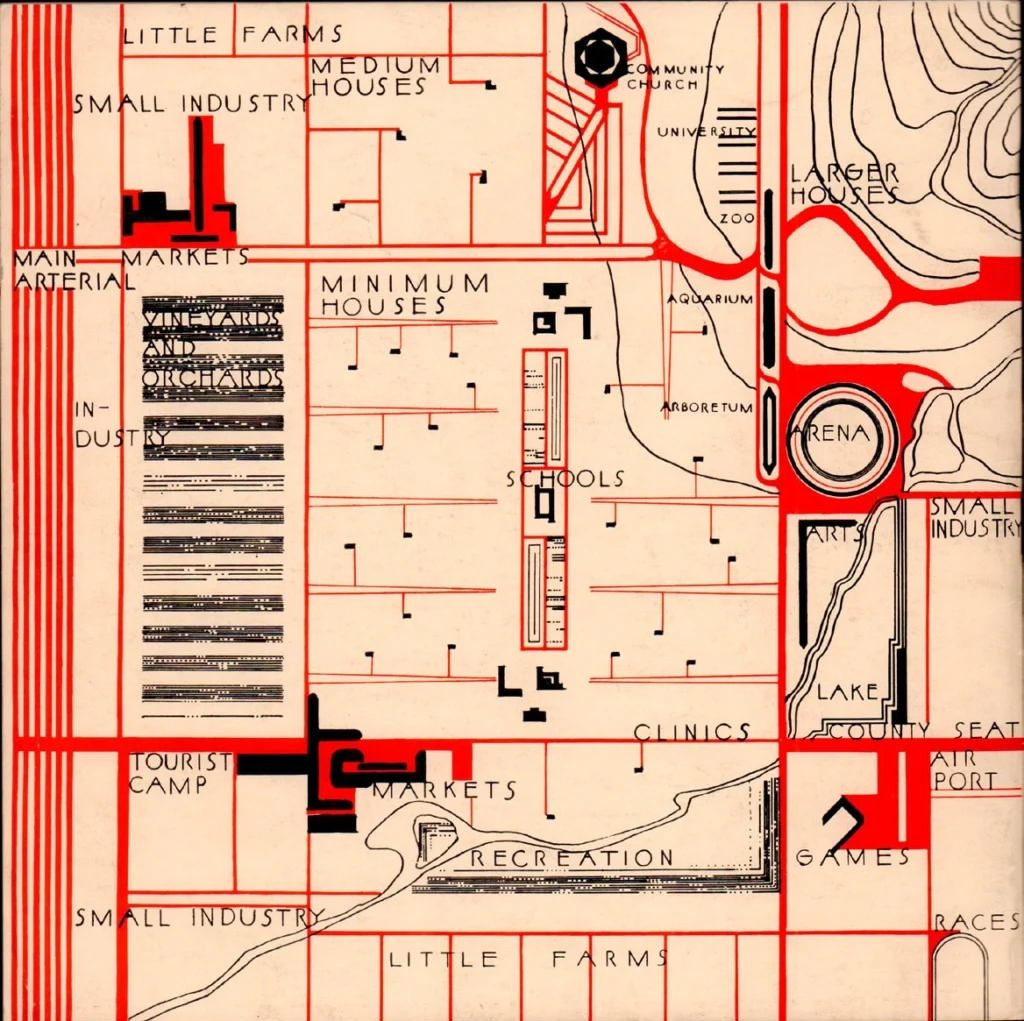
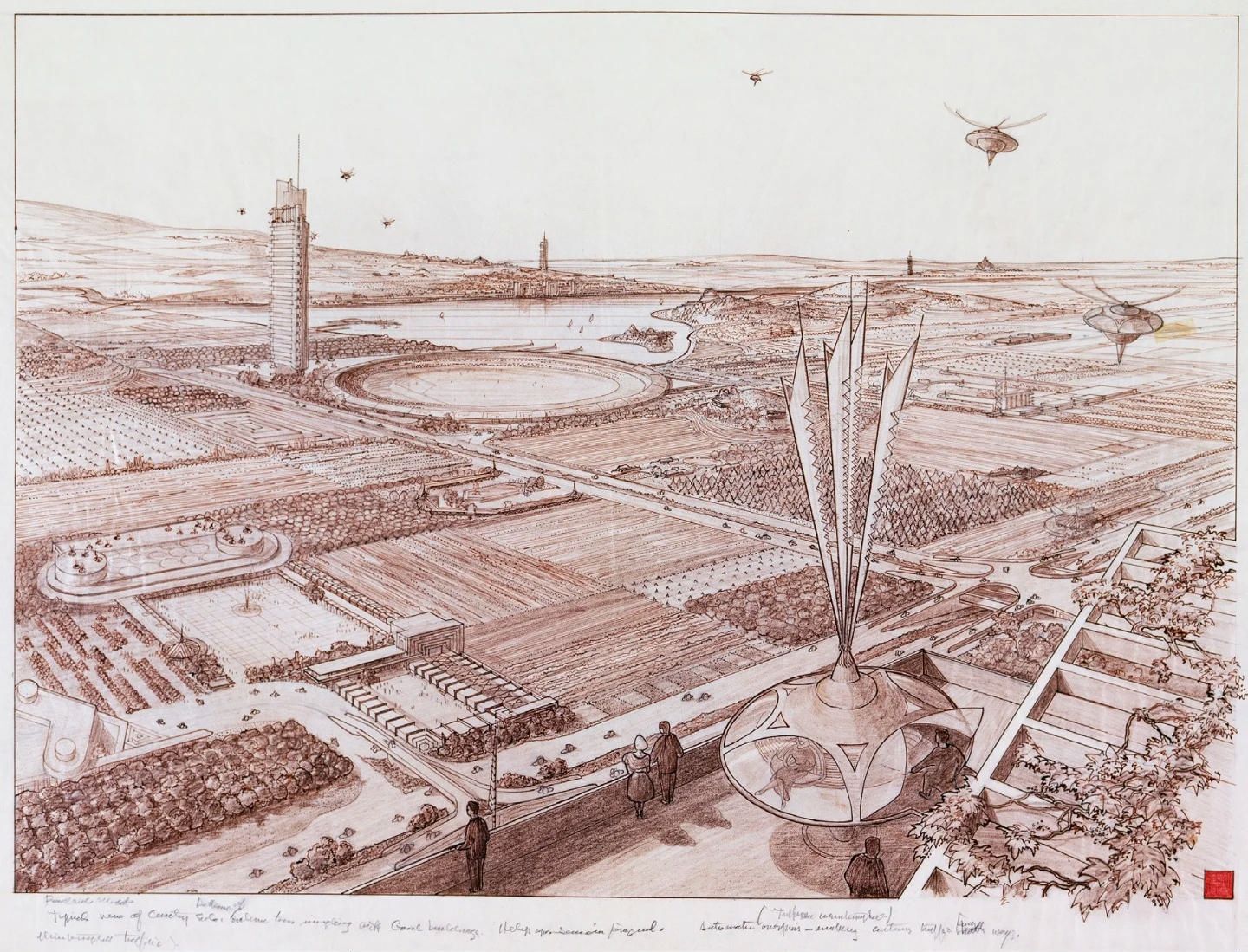
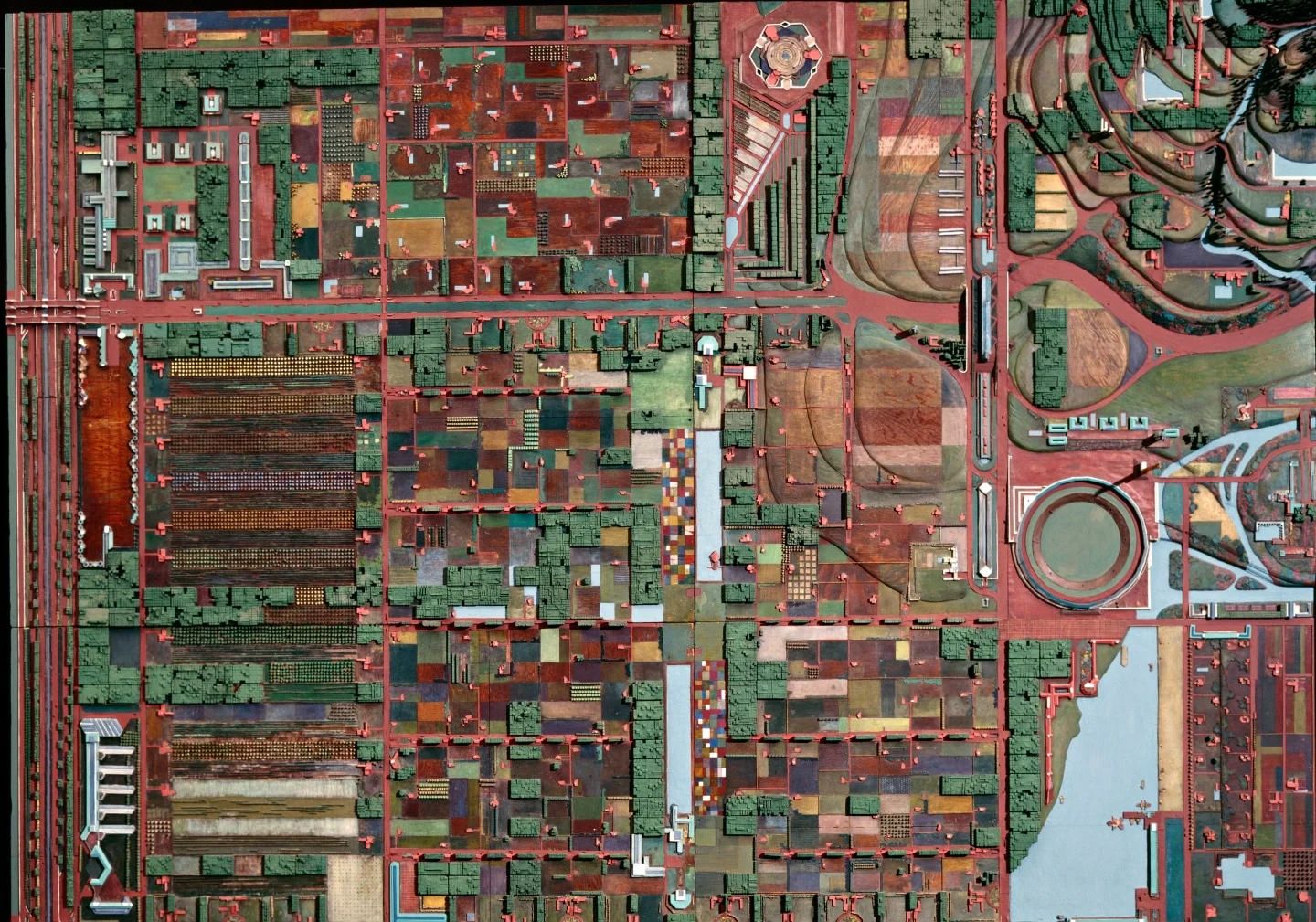
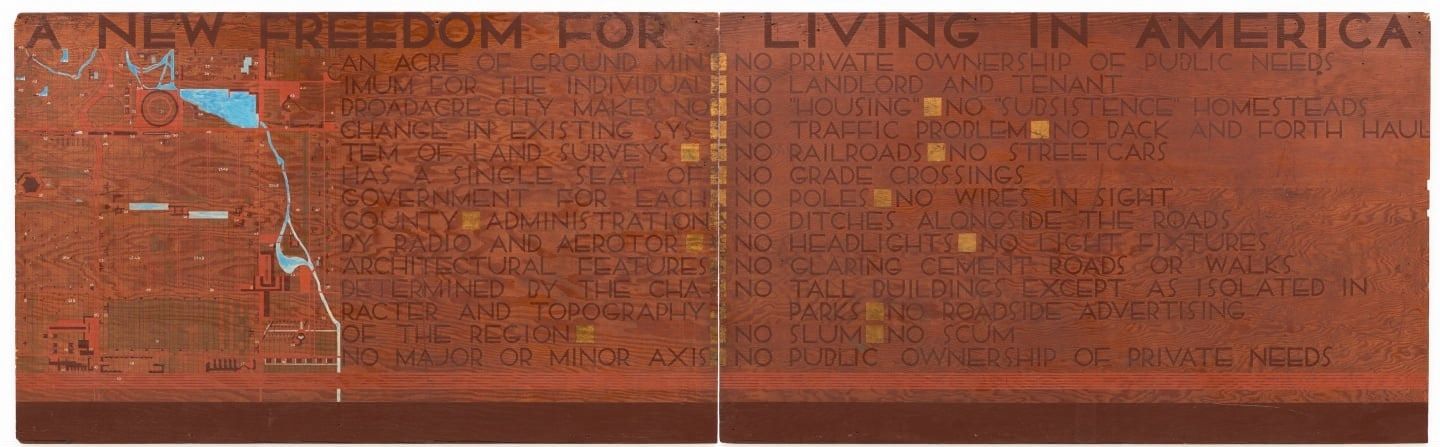
Frank Lloyd Wright’s Broadacre City, first presented to the public in 1935, was a provocative and comprehensive vision for the reorganization of the entire American landscape. Conceived as a direct response to the social and spatial inequities of industrial cities, Broadacre proposed a radical model of decentralization rooted in the ideals of Jeffersonian democracy and individual autonomy. At the heart of Wright’s proposal was the belief that each American family should have access to a one-acre plot of land, enabling them to live, work, and cultivate in harmony with the landscape. This spatial arrangement, supported by the rise of the automobile and advances in telecommunications, would dissolve the rigid hierarchies of the modern city and replace them with a distributed network of self-sufficient homesteads. Broadacre City challenged prevailing notions of urbanism by rejecting density, centralization, and corporate control. Instead, it envisioned a society grounded in small-scale agriculture, localized manufacturing, and direct democratic governance. Wright called for the individual ownership of homes and workplaces, while advocating public control over utilities such as power, transportation, and monetary systems. In doing so, he sought to dismantle the economic and spatial systems that enabled absentee ownership and unearned privilege. Importantly, Wright did not view the city merely as a collection of buildings and infrastructure, but as a living “society in action.” Although the project was never realized, the concept of Broadacre City became a statement on the role of architecture and planning in shaping a more equitable, spiritually grounded, and human-centered civilization.
Project Leads
- Frank Lloyd Wright
Organizations
- Taliesin Fellowship
- New Deal Resettlement Administration (RA)
Stages
- Master Planning
Site
Typology
Urban planningLand use type
Mixed DevelopmentSize
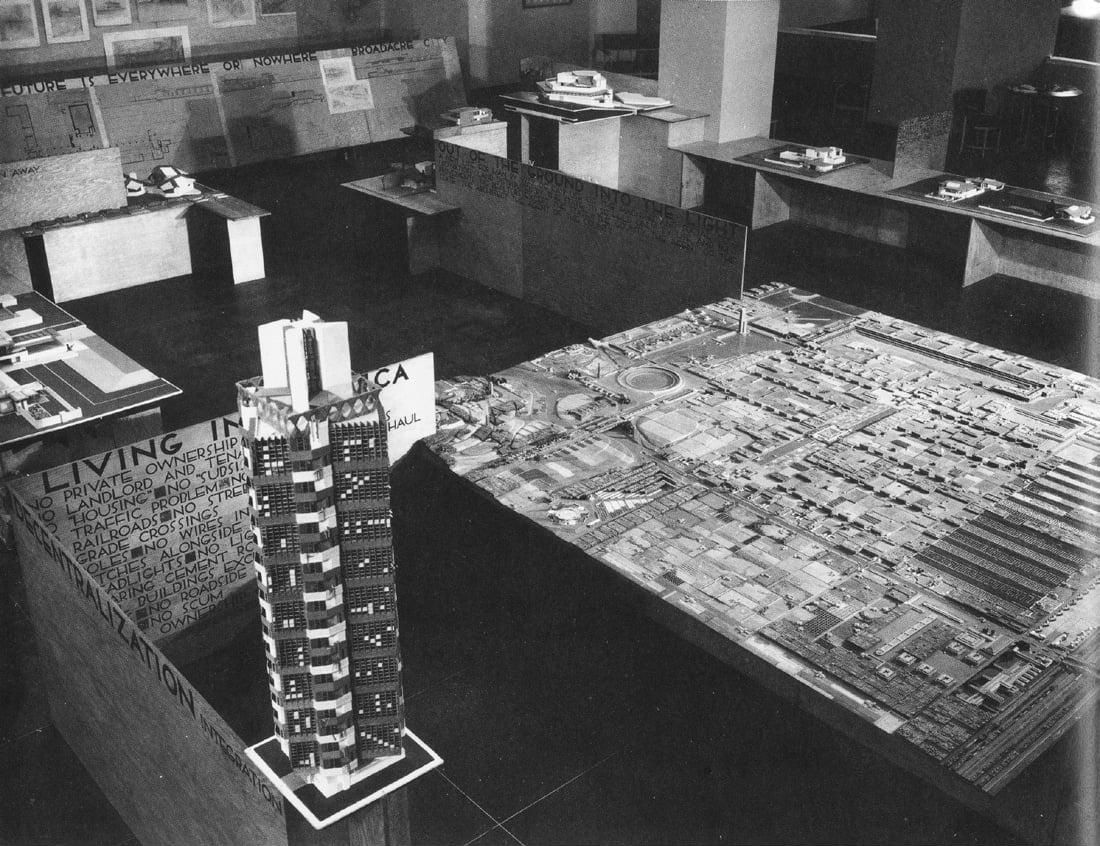
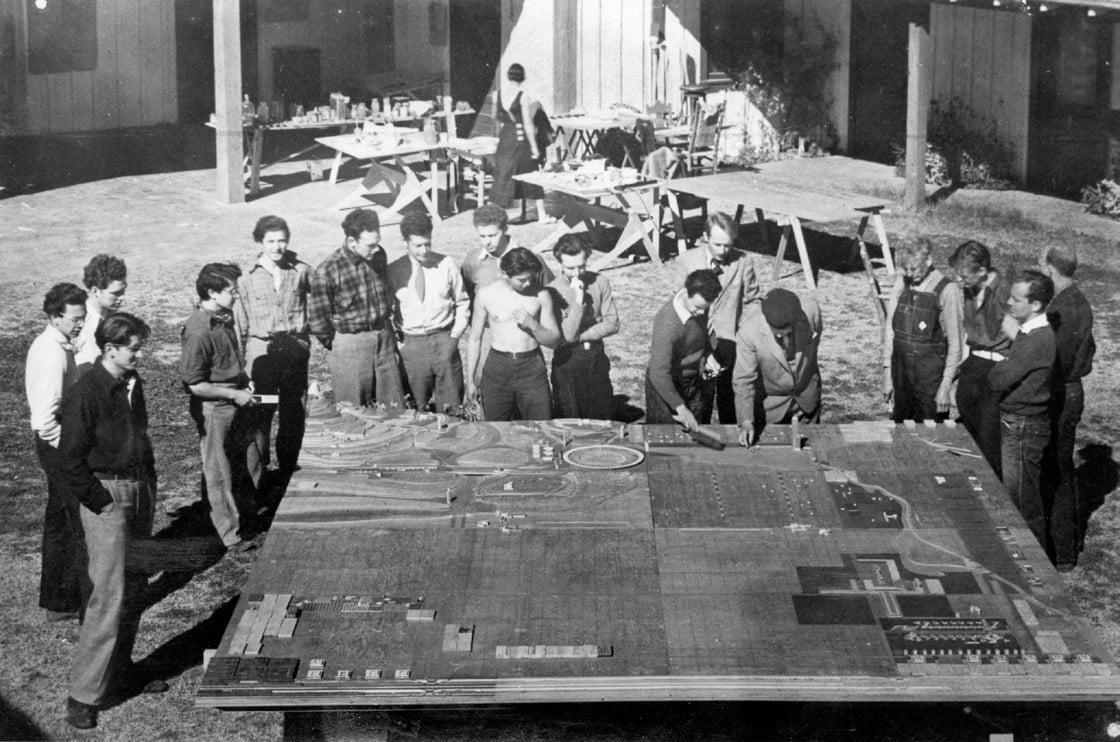
144 square feet (exhibition model)Population/density
1 acre/dwelling unit