Quinta Monroy2003-2006
- informal settlement
- public housing
- slum upgrading
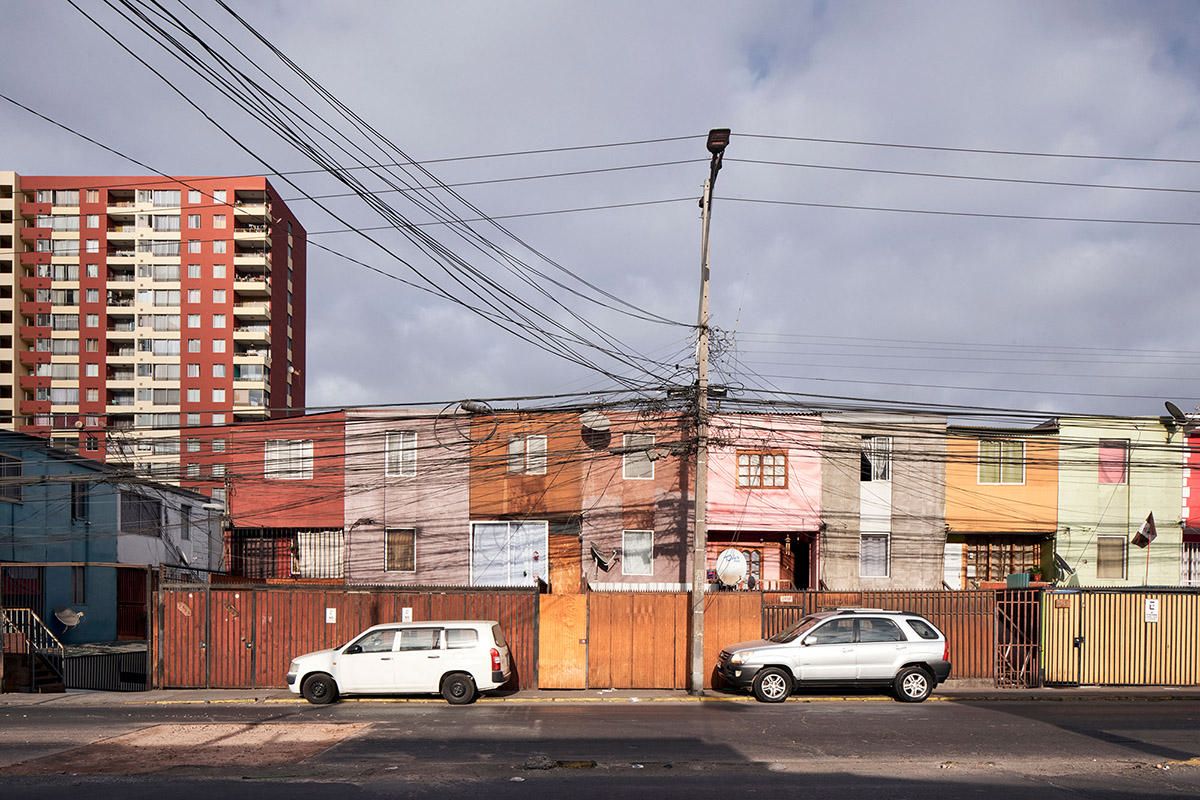
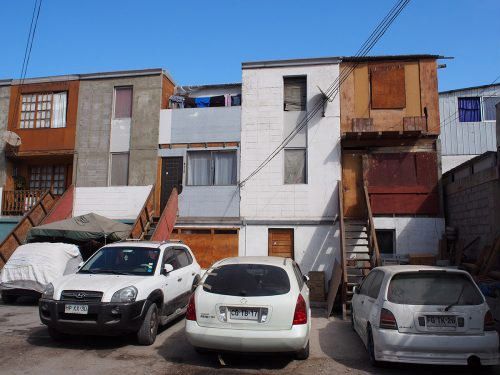
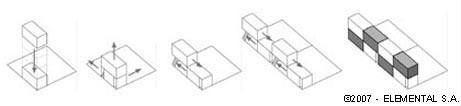
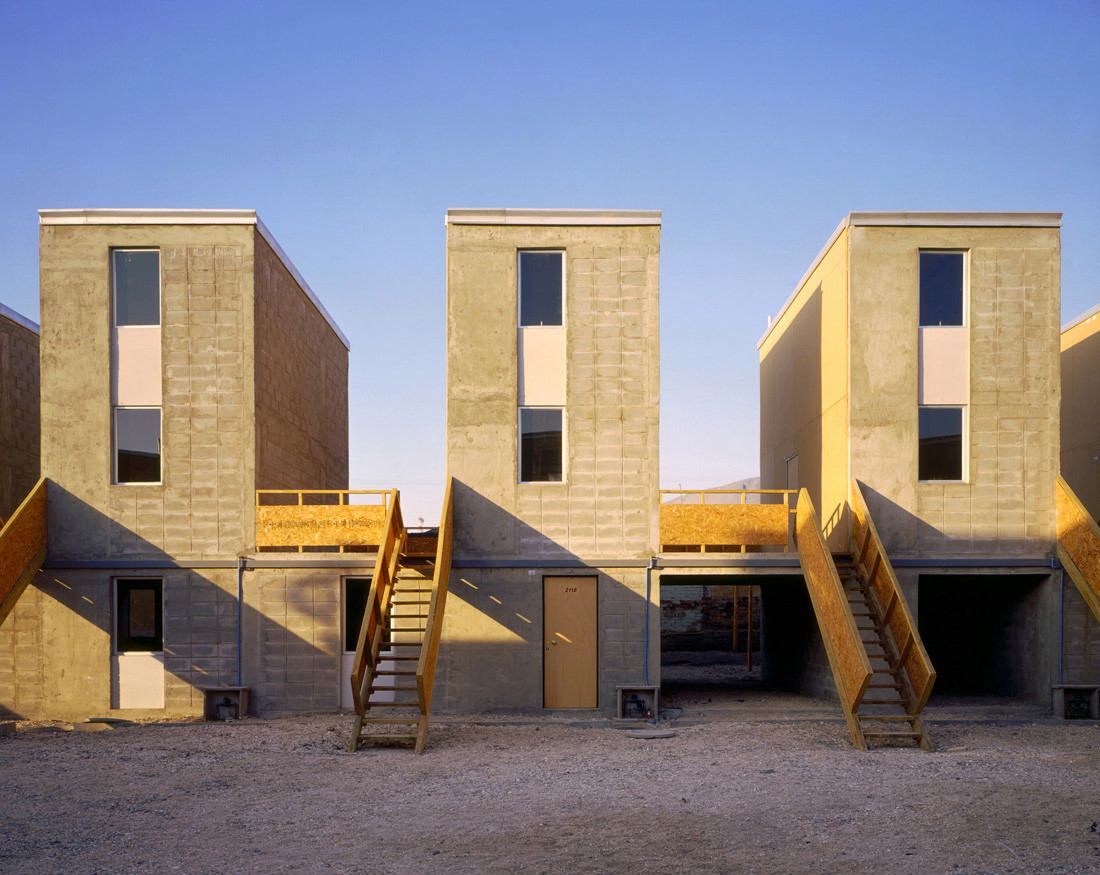
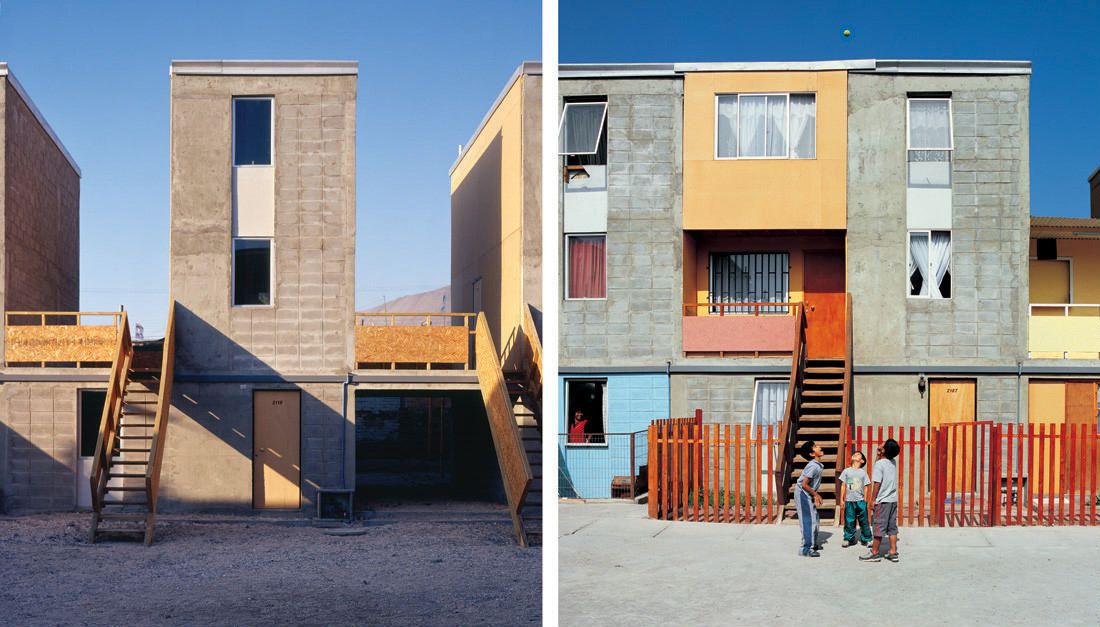
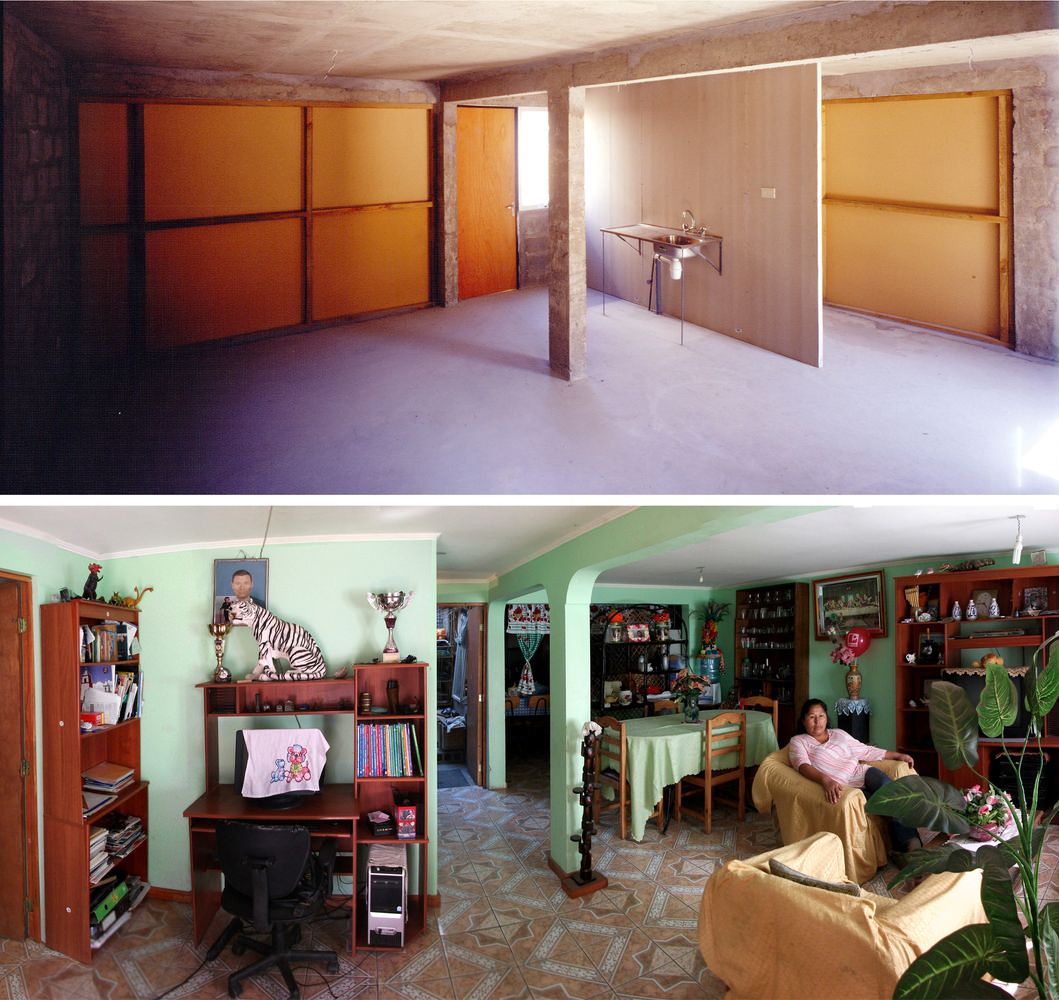
The Quinta Monroy housing project, located in Iquique, Chile, is a landmark in social housing design by Alejandro Aravena and his firm ELEMENTAL. In 2003, the Chilean government tasked ELEMENTAL with rehousing 93 families living in an inner-city informal settlement, on a plot only 5,000 m² in size and at three times the usual land cost. With a limited budget o f$7,500 US dollars per family (including land, infrastructure, and construction), conventional approaches would have forced relocation to the urban periphery or delivered substandard housing. Instead, ELEMENTAL redefined the brief by designing “half of a good house” rather than a complete but inadequate one. The initial units provided the expensive and technically complex elements, including bathrooms, kitchens, stairs, structural walls, and utilities, within a 30 m² footprint. These were designed to be easily expandable by residents into 70 m² homes, allowing families to complete the remaining “half” over time according to their needs and resources. This incremental strategy transformed social housing from a short-term expense into a long-term investment, significantly increasing property values. Quinta Monroy has since become an international model for participatory, adaptable housing and contributed to Aravena receiving the Pritzker Prize in 2016.
Project Leads
- Alejandro Aravena
- ELEMENTAL
Organizations
- ELEMENTAL
- Government of Chile
Stages
- Construction
- Design Development
- Schematic Design
Site
Typology
Social HousingLand use type
ResidentialSize
5000 m²Population/density
93 units (162.5 units/ha)