All Projects
Kowloon High Speed Train Complex
Hong Kong West Kowloon station

Kowloon High Speed Train Complex
2018

Hong Kong West Kowloon station
  • infrastructure
  • place making
  • Mixed Development
  • Masterplan
  • public space
  • transit system

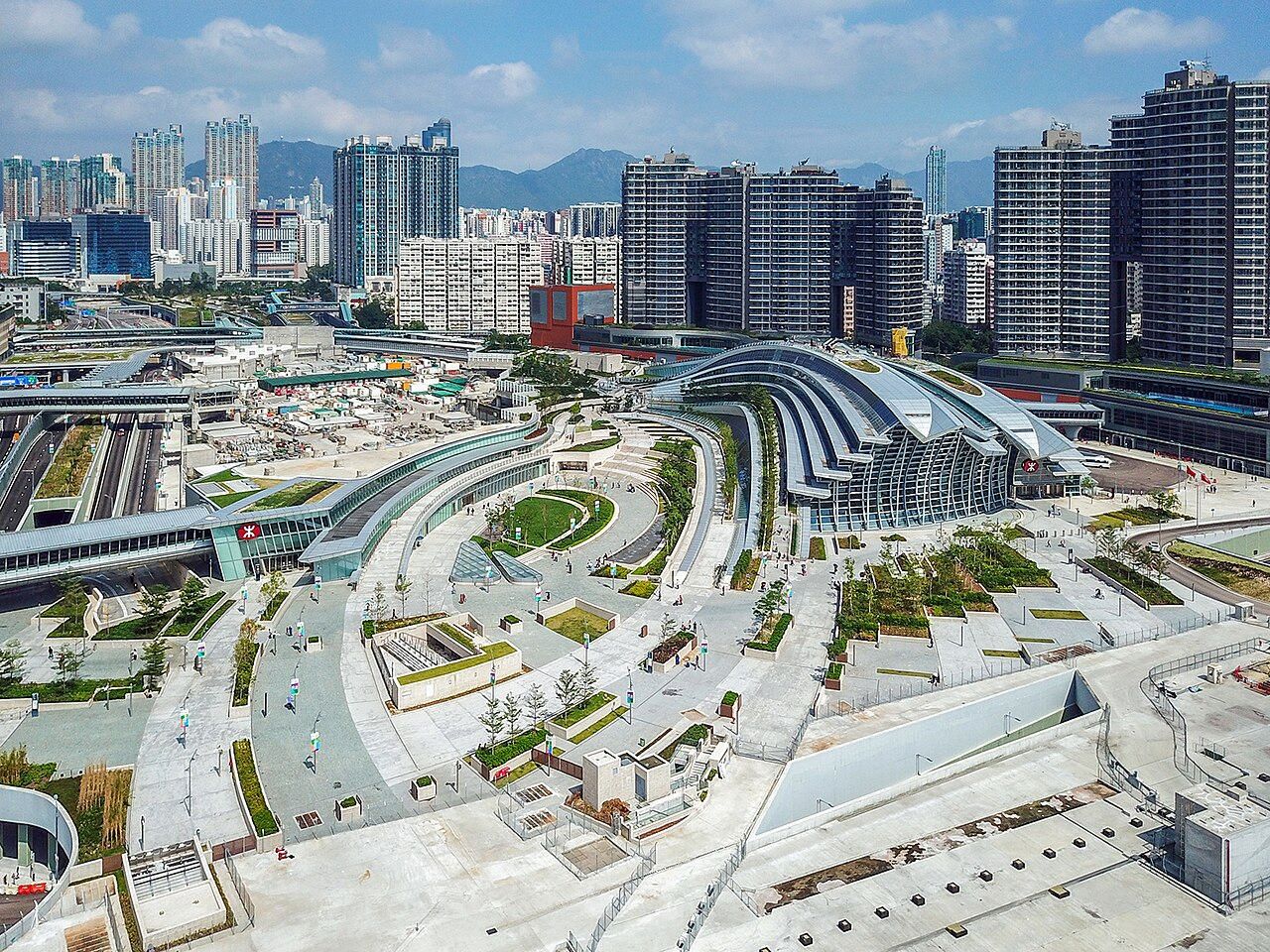
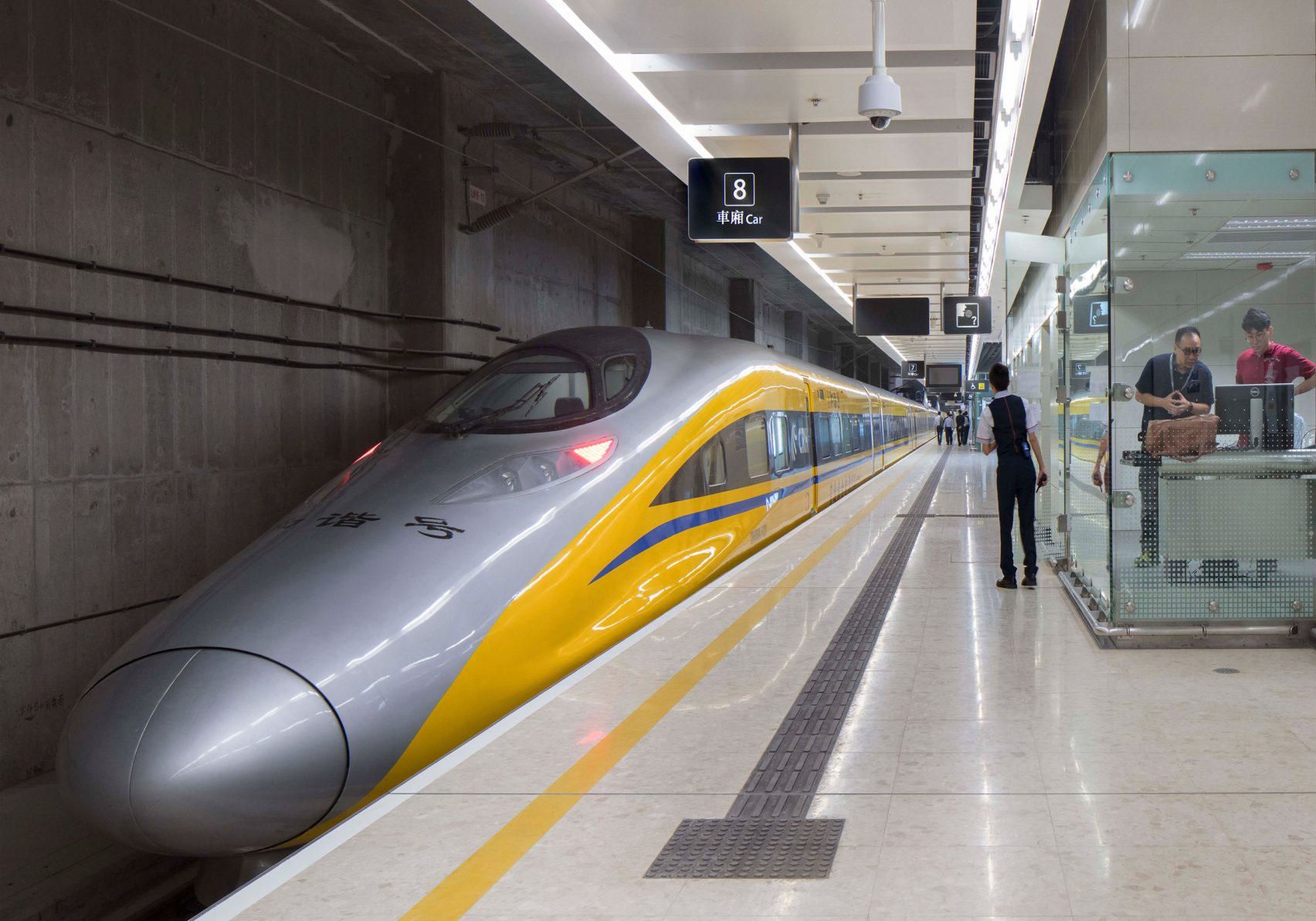
Hong Kong West Kowloon Station is a major cross-border high-speed rail terminal located on the western edge of the Kowloon Peninsula in Hong Kong. Opened in 2018, the station serves as the southern terminus of the Guangzhou–Shenzhen–Hong Kong Express Rail Link (XRL), enabling rapid transit between Hong Kong and major cities in Mainland China. As formerly part of reclaimed land used for cargo handling and transport interchange, the site was later redeveloped as a strategic node connecting not only transportation modes but also linking cultural, civic, and green urban assets. Functioning as a gateway between Hong Kong and Mainland China, the station plays a strategic role in the region’s transportation and economic systems, which is 142 km in length, connects with the National High-speed Rail network all the way to Beijing, the length of which is more than 25,000 km. . With high-speed rail links that dramatically reduce travel times—14 minutes to Shenzhen and 47 minutes to Guangzhou. The station covers an area of approximately 11 hectares, with all 15 tracks—including 9 for long-haul and 6 for short-haul trips—are located underground, allowing the ground level to be devoted to public space and pedestrian use. The design emphasizes integration across multiple scales: city-to-city transportation, local mobility, and landscape connectivity. Hong Kong West Kowloon Station exemplifies a new paradigm in urban design where infrastructure is conceived not as a barrier but as a civic and ecological asset. Beyond that, it embeds the infrastructure into vibrant public life, incorporating commercial zones, cultural spaces, and generous public areas together.

Project Leads

    Organizations

    • MTR Corporation Limited
    • AECOM–Aedas Joint Venture
    • EDAW Inc.
    • Leighton – Gammon Joint Venture
    • Windell
    • Meinhardt
    • ALT
    • Buro Happold

    Stages

    • Master Planning
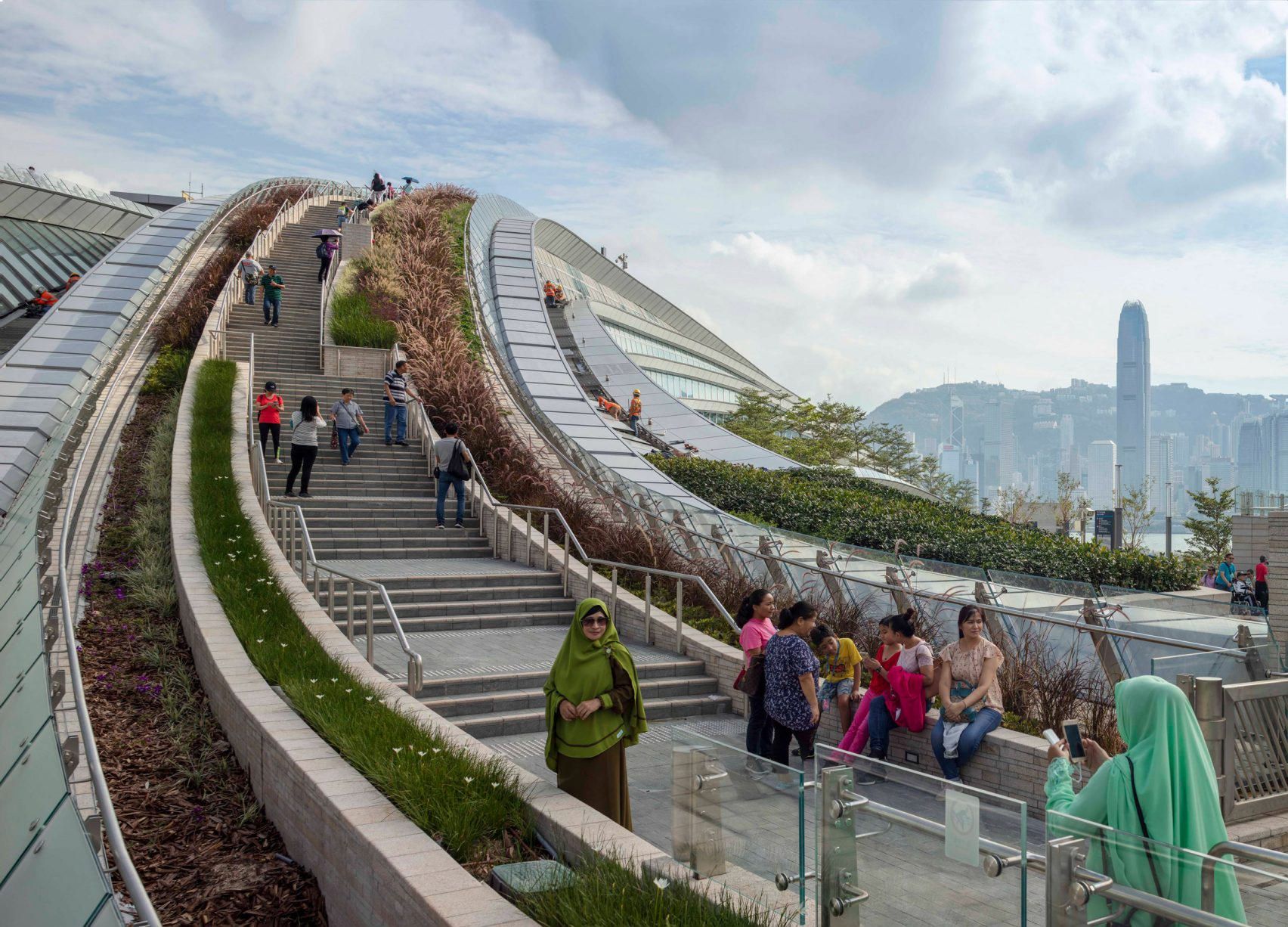
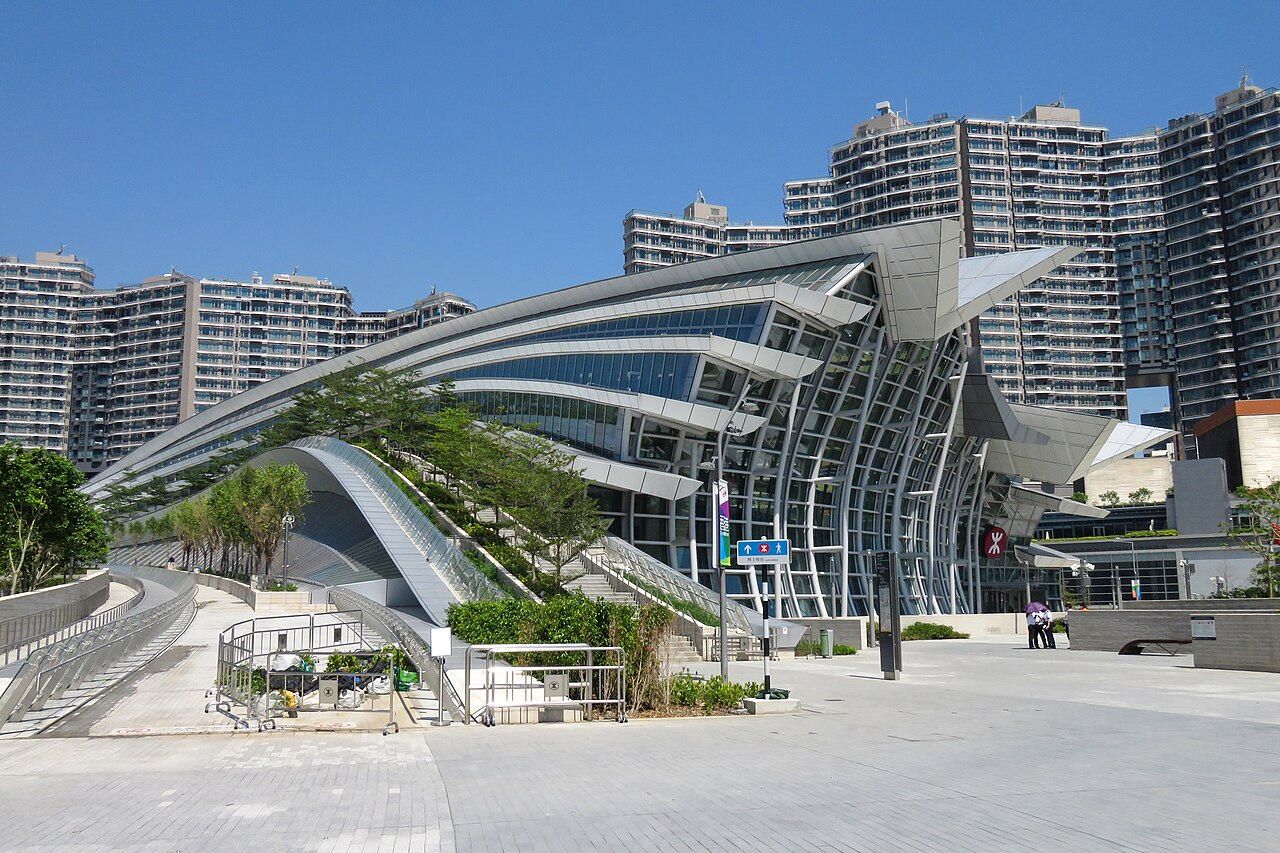
    Arching rooftop walkway and garden tops
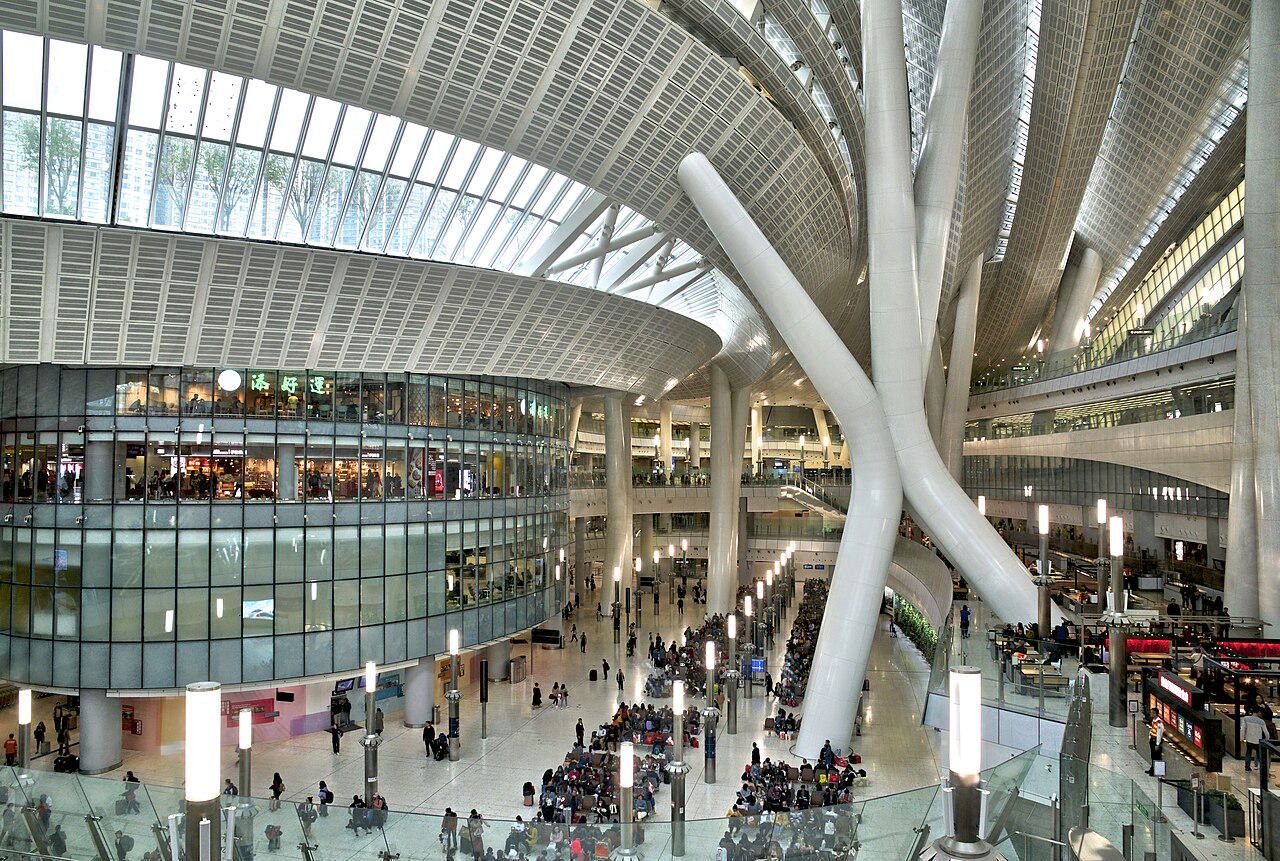
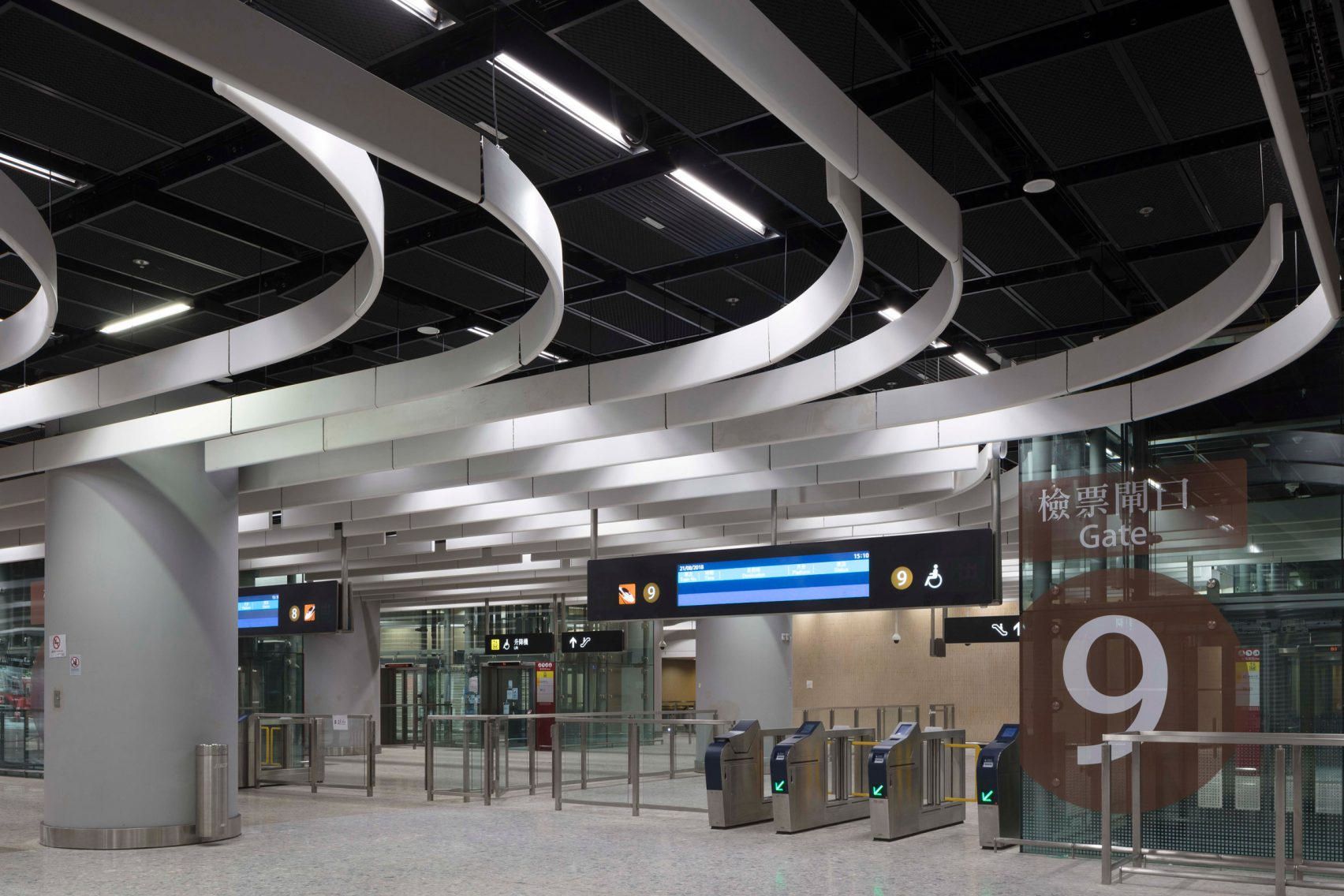
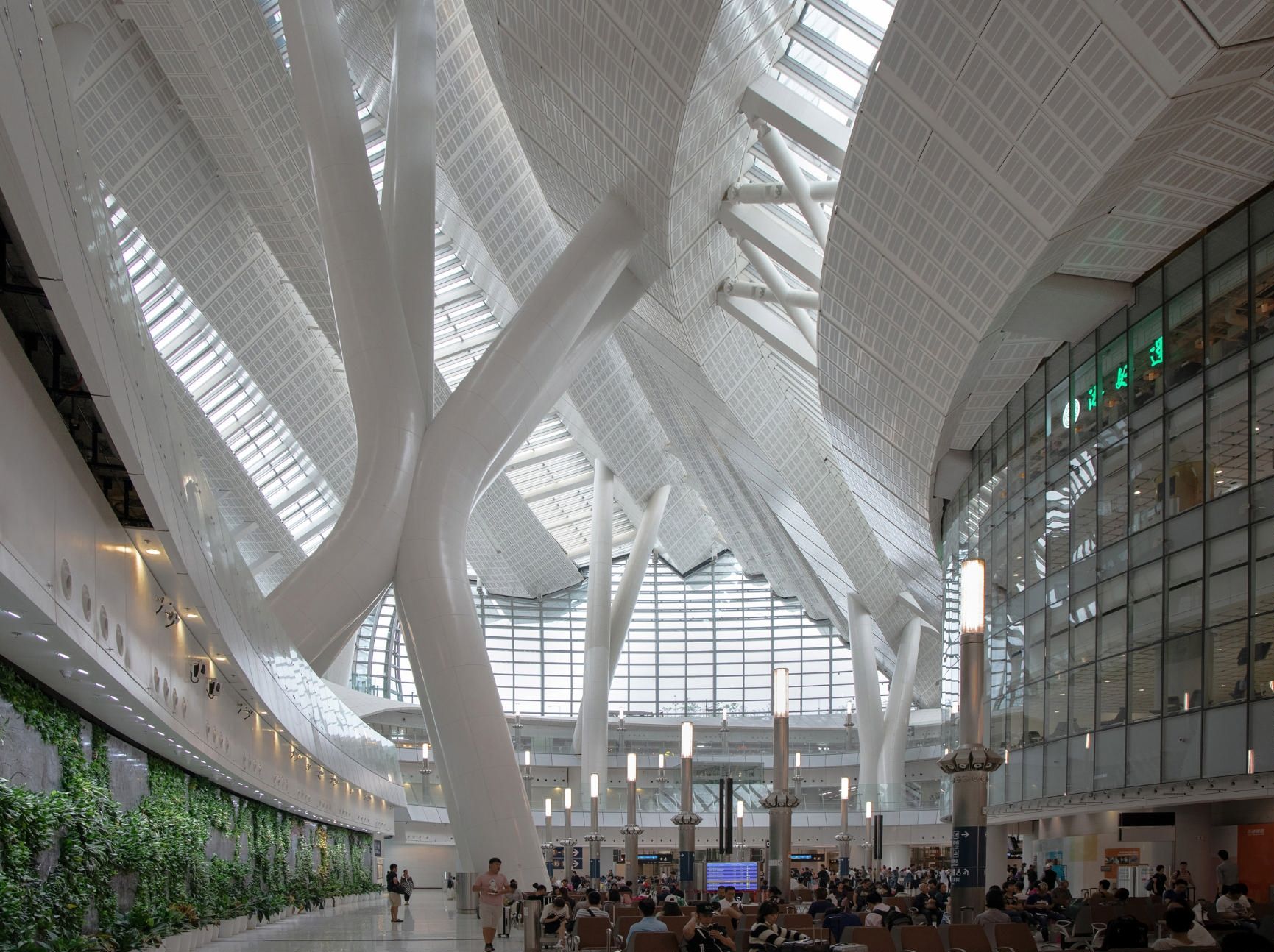
    Interior view of the station

    Site

    Aerial view of the station
    Hong Kong West Kowloon Station goes well beyond the role of a typical transit hub. It functions as an architectural innovation and urban destination. The design not only addresses the logistical demands of a major international rail terminus but also creates a new civic and cultural focal point for Hong Kong. Architecturally, the terminus plunges deep into the earth, with multiple layers of circulation organized vertically. Escalators, ramps, and terraces guide passengers intuitively from the surface down to the platforms, which lie 26 meters underground. This vertical arrangement reflects Hong Kong’s unique urban typology, where space is maximized in layers in response to land scarcity. Another defining feature of the station’s urban design is its multimodal and multilevel circulation. By burying the tracks and platforms underground, the design preserves continuity at street level while enabling vertical stratification of uses. Passengers and visitors experience a gradual descent through interconnected ramps, escalators, and terraced steps. Sustainability is integral to the station’s urban design approach. The station’s expansive glass façade and roof flood the interior with natural light, reducing energy use and contributing to its LEED and BEAM Plus certifications. Above, a publicly accessible green roof doubles as an urban park of over 3.6 hectares, offering panoramic views of Victoria Harbor. Beyond environmental metrics, the project is also culturally responsive, with its layout and orientation informed by Feng Shui principles. The development direction of Kowloon station has a sustainable direction. First, the planning and design of Kowloon Station caters to people's growing transportation needs and life needs, such as Planned "mega building", the station has multiple uses of vertical space, which is a unique sustainable urban development method in of compact city like Hong Kong. Hong Kong combines high-density and diversified development, making massive progress in the sky gardens and urban parks, and is committed to guiding people to reduce carbon dioxide emissions from walking or public traffic travel. The development of West Kowloon Station reflects a strategic commitment to sustainable urbanism. Its planning and design address the evolving needs of a growing urban population, integrating housing, employment, entertainment, and cultural functions within a unified urban infrastructure. Conceived as a “mega-building,” the station employs a multi-use vertical structure that exemplifies efficient land use in a dense urban context like Hong Kong. By combining high-density development with green infrastructure, such as sky gardens and urban parks, the project supports a low-carbon lifestyle and promotes walking and public transit as primary modes of mobility. Despite its many achievements, the West Kowloon Station has faced challenges and controversies. Its role in strengthening ties with Mainland China has raised concerns over autonomy and identity related to political concern. Critics also question the high cost and use of valuable urban land, arguing that such investment requires closer public oversight and long-term justification. Still, these tensions underscore the station’s complexity rather than diminish its architectural and urban significance. West Kowloon Station shows the aspirations of contemporary Hong Kong, a balance of connectivity and civic life in a single integrated urban form.

    Typology

    Transit Infrastructure , Landscape deck, Cultural hub

    Land use type

    Mixed Development

    Size

    25 acres

    Population/density

    43,033 people per square kilometer (In Kowloon distrcit, 2025)

    Gross floor area

    400,000 square meters ( the largest underground train station in the world)

    Community Infrastructure

    • public park
    • public transportation

    Timeline

    2000-2023

    People

    Awards

    Media

    Filters:
    No records.

    Texts

    Filters:
    No records.

    Bibliography

    Sort