All Projects
Kuwait Urban Study (Mat-Building)
Kuwait City, Kuwait

Kuwait Urban Study (Mat-Building)
1968

Kuwait City, Kuwait
  • building system
  • cultural
  • historic
  • Masterplan
  • Mixed Development
  • place making

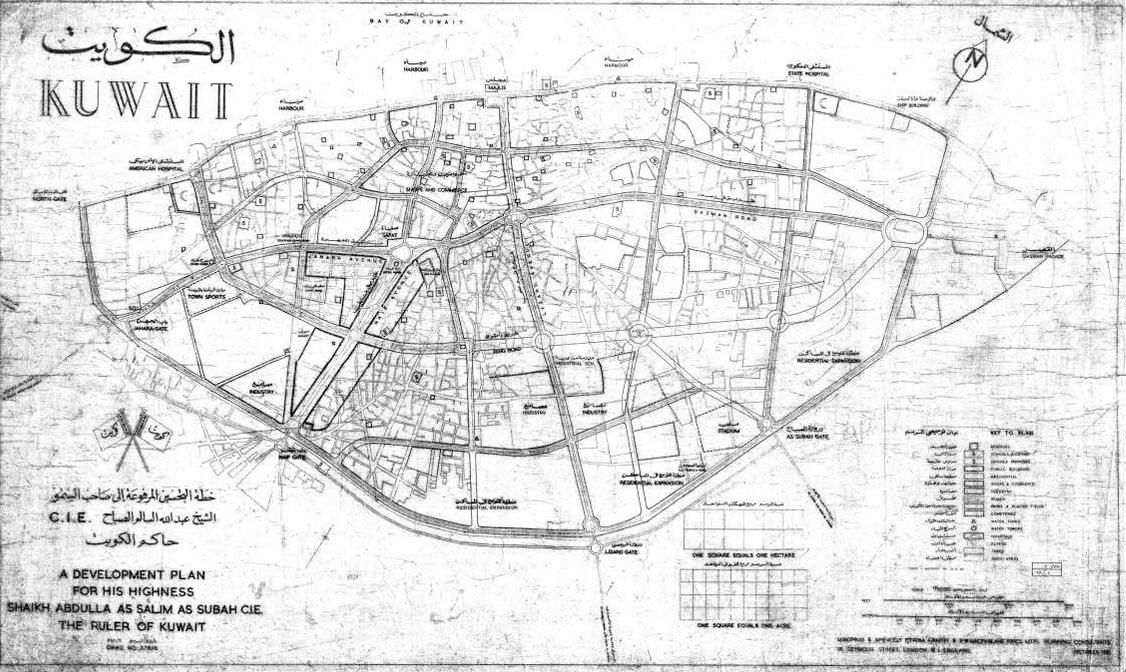
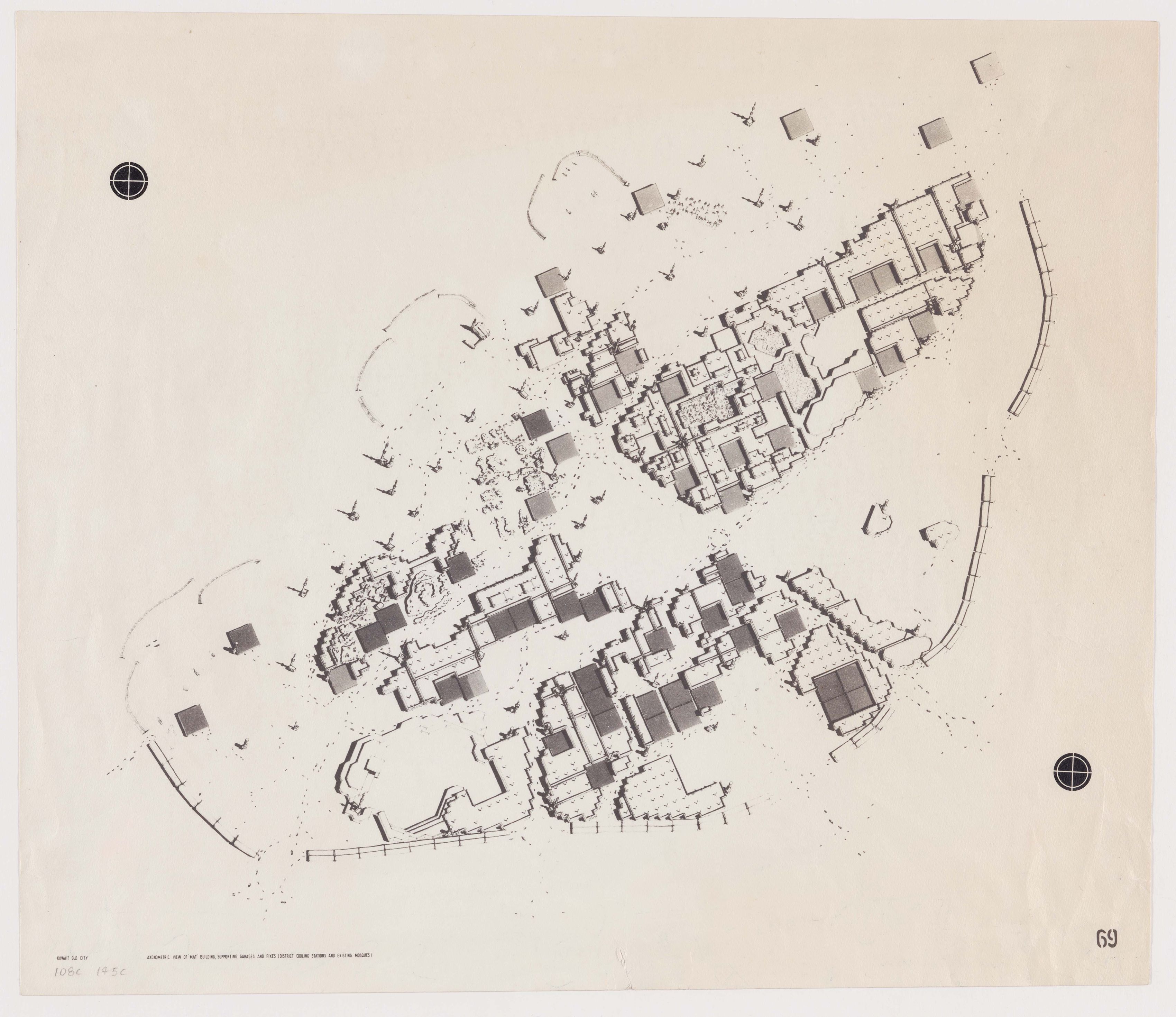
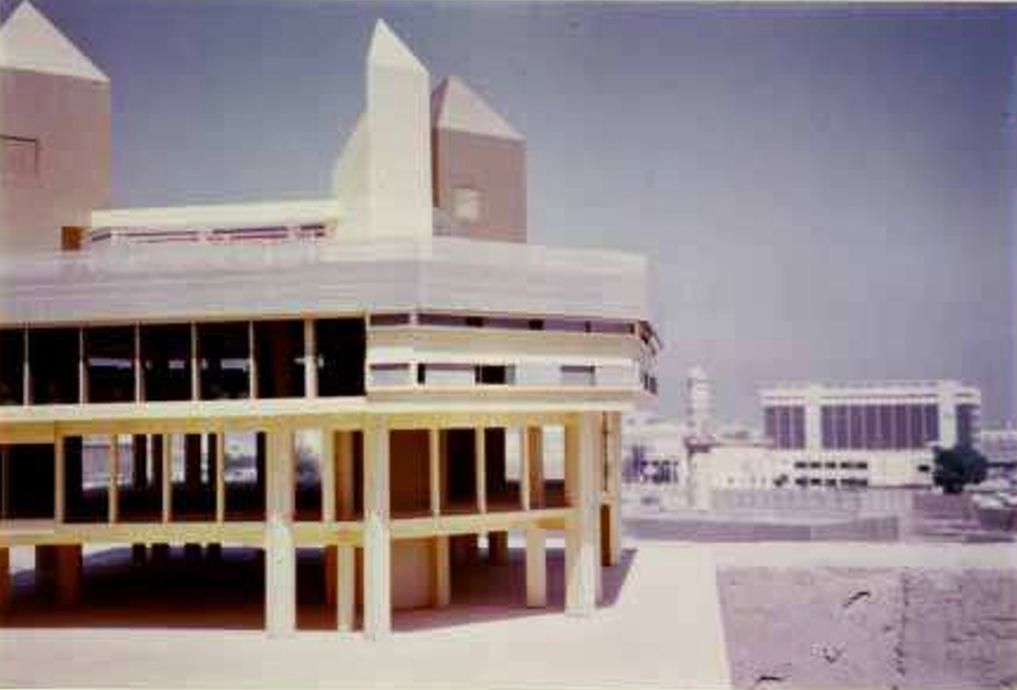
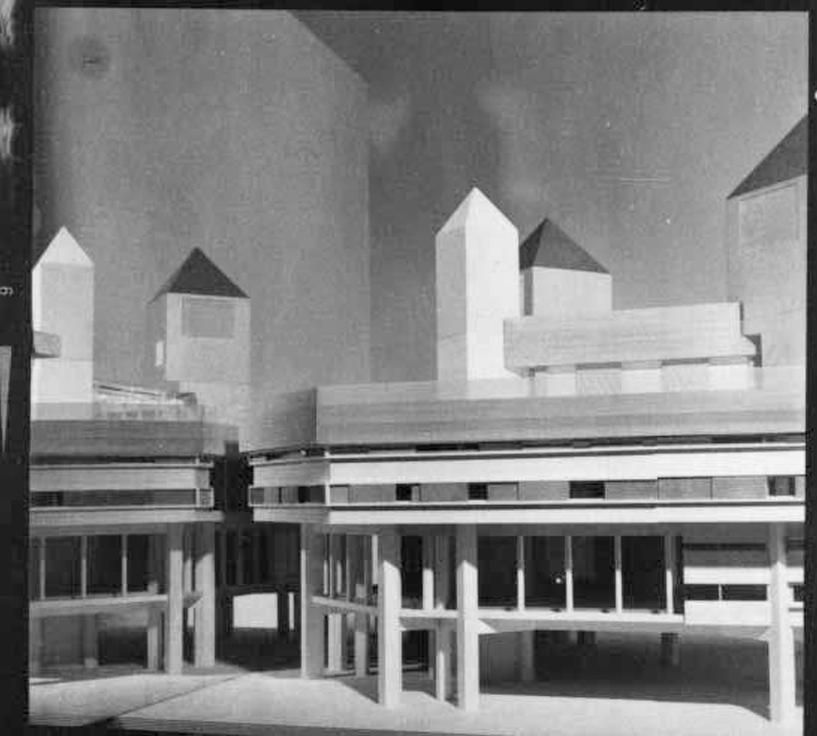
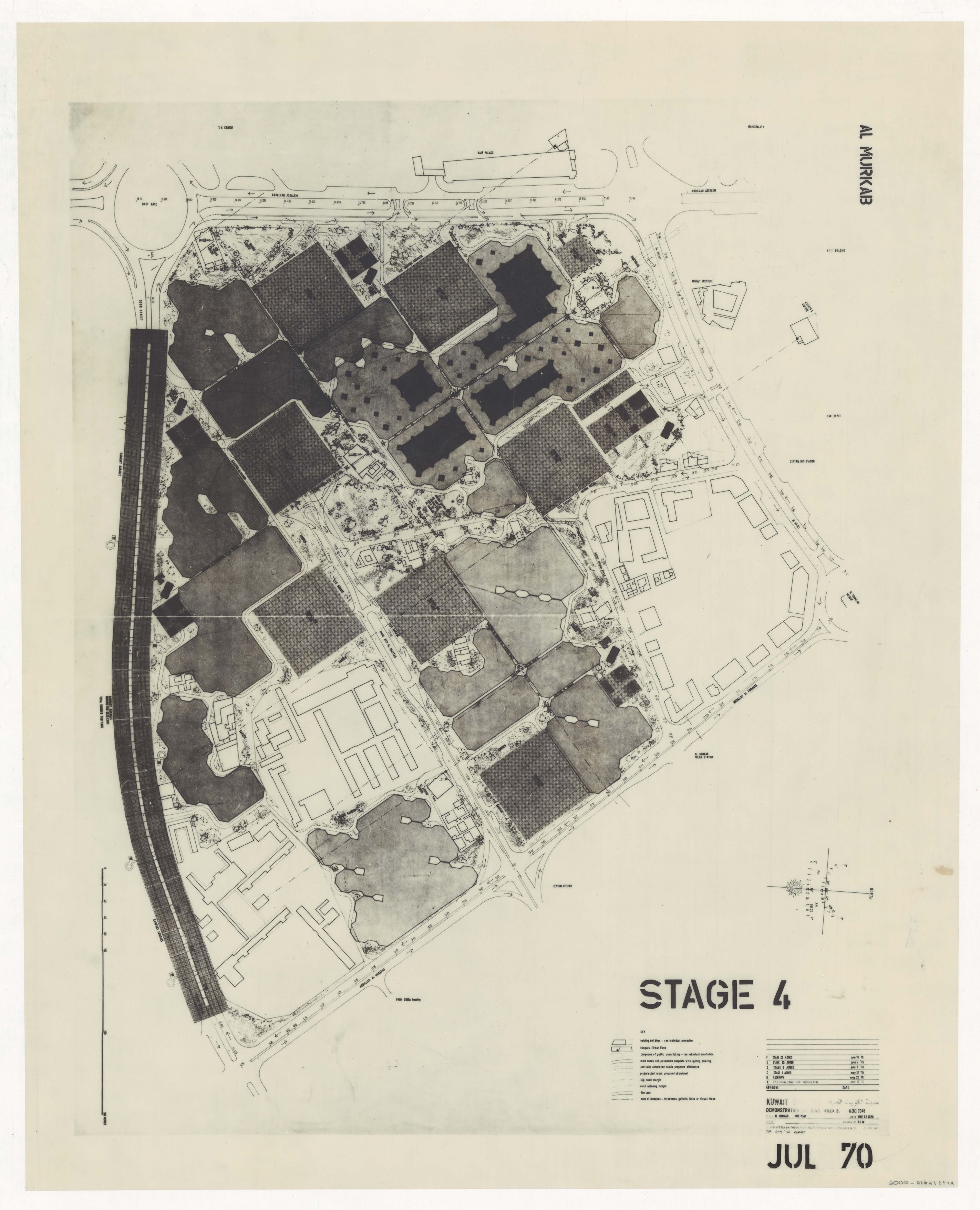
In late 1970, Alison and Peter Smithson produced an ambitious Kuwait Urban Study and Mat-Building for the government-controlled Mirqab district at the historic district of Kuwait City. Conceived as a continuous, low-rise “carpet” of buildings that would reinstate pedestrian life and reconnect surviving historic fragments, the unbuilt scheme sought to give the rapidly modernizing oil city “a quality all her own” by re-interpreting Arab spatial traditions within a modern megastructure. It also served as a critical response to the perceived "Englishness" of the 1952 Master Plan prepared by the firm Minoprio, Spencely and Macfarlane (MSM). This historic heart of Kuwait City, once enclosed by defensive walls, had grown over centuries into a compact settlement of shaded alleys, courtyard houses, and active souks. By the mid-20th century, however, oil-driven redevelopment had altered the city’s form and character. The proposal emerged after Kuwait’s first British-led master plan (1952) had demolished much of the mud-brick port town, prompting popular unease over lost identity. By 1968, concern over this cultural erosion prompted the Advisory Planning Committee (APC) invited several Team 10 architects; the Smithsons responded with a study that combined urban morphology research, historic-fabric mapping and a detailed ministries complex, presented to Crown Prince Jaber in 1970 as a counterstrategy to tabula-rasa planning. The Smithsons ’proposal was grounded in a careful reading of Kuwait’s pre-oil urban form. Historic mapping revealed a tightly knit network of courtyard houses and mosque-centered districts. Rather than treating these remnants as isolated monuments, the Smithsons introduced the core concept of the “mat-building,” a continuous, horizontally spread structure that replaced isolated blocks with a cohesive urban field. Organized on a modular grid, the mat maintained low building heights—generally two to four stories, with the scale of traditional Kuwaiti architecture for a pedestrian-oriented environment. Internal passages, shaded arcades, and intimate courtyards replicated the climatic performance and social character of the former alley-and-courtyard system, providing relief from intense solar exposure.

Project Leads

  • Peter Smithson
  • Alison Smithson

Organizations

  • Alison and Peter Smithson
  • The Department of Public Works
  • Municipal Planning Department / Kuwait Municipality

Stages

  • Master Planning
  • Schematic Design
An early version of the Kuwait City proposal by Minoprio Spencely and MacFarlane, October, 1951
Axonometric view

Site

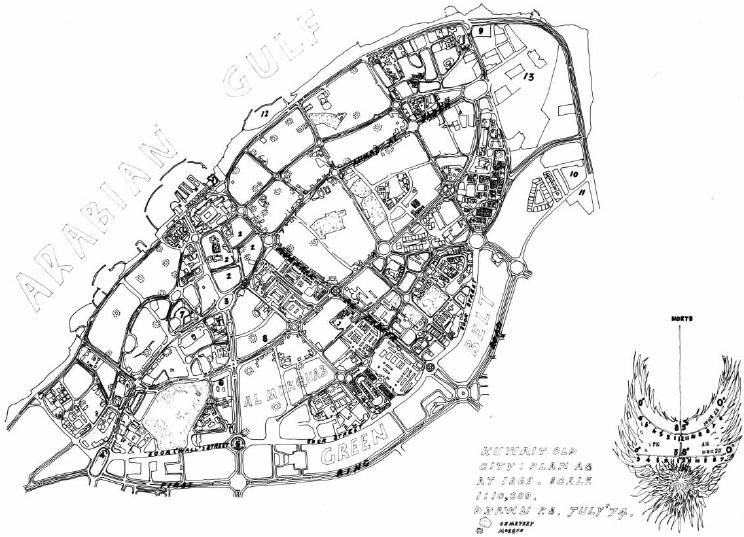
Site analysis by Alison and Peter Smithsons
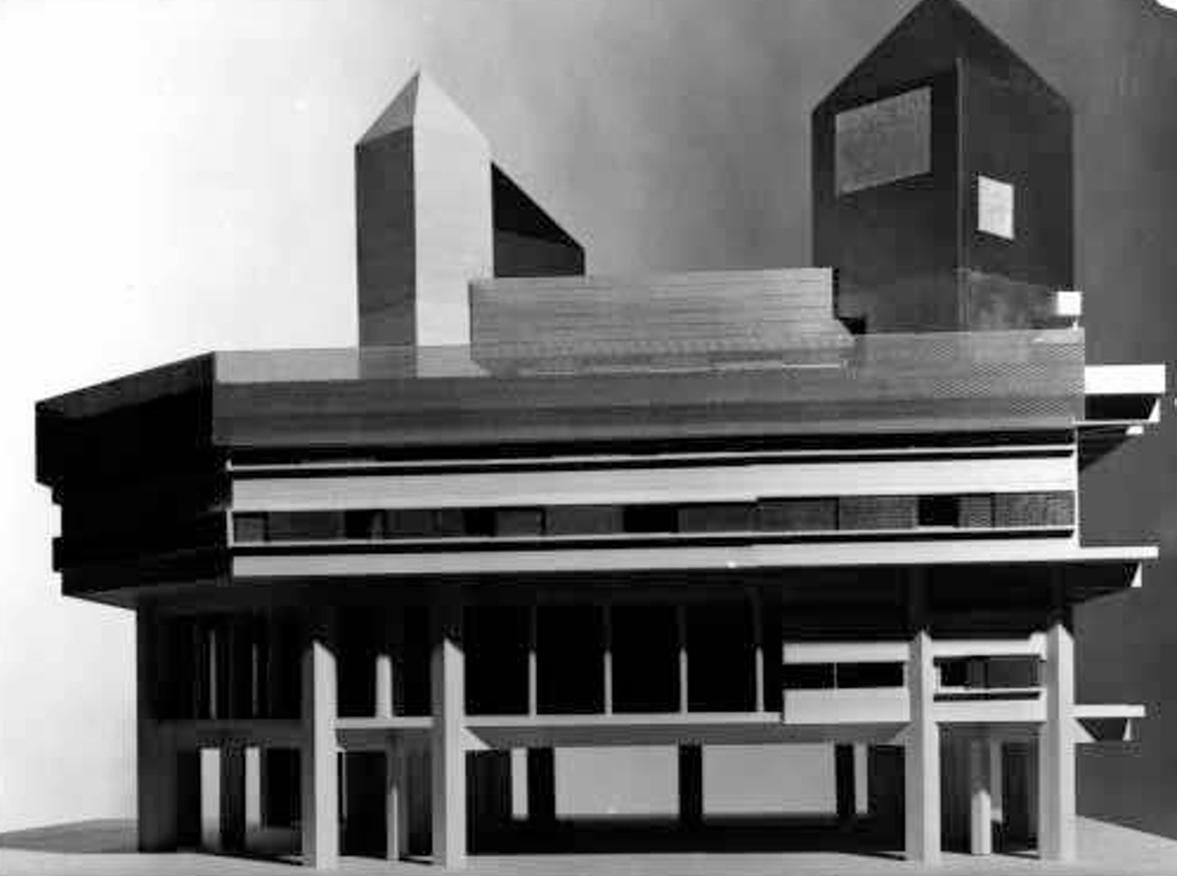
In the Middle East, the concept of critical nostalgia has gained increasing significance as a lens for re-evaluating the present (Al-Ragam, 2015). In this context, Alison and Peter Smithson’s 1968 review of Kuwait’s redevelopment focused on restoring the “lost” social connections eroded by ongoing modernization. Their proposed solution, the mat-building—was conceived as a means to restore legibility to the city. Unlike the modernist preference for vertical, standalone objects, the mat-building was envisioned as a low-rise, multi-level planning grid and physical framework—an “interlinked megastructure” traversing the downtown, which would provide shade and reintroduce a sense of connectedness to local landmarks. Minarets of inner-city mosques were incorporated as visual organizing elements and focal points. The overall proposal was a low-profile scheme yet embraced the interchangeability of functions reflecting what the Smithsons described as the adaptive quality of the Arab city. Later infill within the mat-building was to be zoned for specific uses, merging Arab urban traditions with contemporary design. Climatic responsiveness was another strategic scheme in the Smithsons’ urban logic. The dense arrangement of built mass, interlaced with shaded pedestrian routes and semi-enclosed courts, functioned as a thermal buffer, which reduced solar gain and harnessed cross-ventilation. The hooded ventilation towers could expel hot air and draw cooler breezes through the internal circulation network. These devices imitated the wind towers (barjeel) found in Gulf vernacular architecture yet were reinterpreted within the modernist language of the mat-building. Although the proposal was never built, it demonstrated a way of organizing the city that could have been adapted through policy, particularly via multi-level zoning capable of accommodating multiple programs within a coherent framework. This approach would have allowed new development to remain sensitive to social and cultural patterns while supporting urban growth. Despite its potential, the Smithsons’ mat-building did not progress beyond the proposal stage. Subsequent changes in urban policy, particularly the relaxation of zoning laws in 2004, led Kuwait into a second wave of large-scale construction-- this time characterized by high-rise towers detached from their urban surroundings and from one another. This approach was an apparent antithesis of the mat-building vision.

Typology

Masterplan

Land use type

Institutional

Size

~200 km² (1970)

Population/density

2,760 people/km 2

Community Infrastructure

  • cultural programs
  • physical mobility
  • public park

Timeline

1952-1975

People

Awards

Media

Filters:
No records.

Texts

Filters:
No records.

Bibliography

Sort